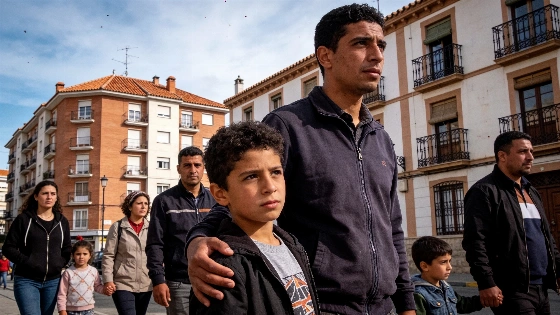
Spain's population reached a historic high of 49.8 million by July 2026. The Valencian Community posted the fastest growth, mainly due to foreign-born arrivals. National figures show a slowdown compared to previous years.
The Valencian Community has recorded the highest population growth in Spain, with official figures showing a 0.43% increase in just three months. As of July 1, 2026, the region's population reached 5,574,948, outpacing all other autonomous communities, according to provisional data from the Instituto Nacional de Estadística (INE). This surge places Valencia ahead of the Balearic Islands and Asturias, which saw more modest rises of 0.36% and 0.29% respectively.
Nationally, Spain's population climbed by 104,178 during the second quarter, reaching a record 49,801,559 residents. This is the highest figure ever recorded, with women making up 25,338,952 and men 24,462,607. However, the overall growth rate for the first half of 2026 slowed to 0.93%, below the 1% seen in each of the previous three years.
The INE attributes this continued expansion almost entirely to the arrival of people born abroad. The number of foreign-born residents now stands at 10,291,807, a figure that exceeds the total of those holding foreign nationality due to ongoing naturalization processes. Over the last quarter, the foreign national population grew by 87,197, reaching 7,437,543, while Spanish nationals increased by just 16,981.
In the Valencian Community, the trend is even more pronounced. Over the past year, the region gained 96,874 new residents, a 1.8% annual increase—double the national average. Of the current population, 4,115,515 were born in Spain and 1,459,433 abroad. The last quarter alone saw 22,966 more foreign-born residents, compared to just 816 additional Spanish-born inhabitants. By nationality, 4,401,133 hold Spanish citizenship and 1,173,815 are foreign nationals.
Colombian, Venezuelan, and Moroccan nationals accounted for the largest groups of new arrivals in the second quarter of 2026, with 34,000, 23,300, and 21,100 arrivals respectively. The number of households in Spain also rose, reaching 19,874,860, an increase of nearly 59,000 in three months.
While the Valencian Community leads in growth, other regions such as the Canary Islands, Extremadura, and La Rioja saw much smaller increases, with the Canary Islands registering just 0.03%. The demographic shift is part of a broader trend across Spain, where foreign-born residents are increasingly sustaining population growth as the number of Spanish-born citizens declines.
This pattern of internal redistribution and migration echoes developments in other parts of Spain, such as the relocation of unaccompanied minors from Ceuta, Melilla, and the Canary Islands to mainland regions, including Valencia. For more on how regional population changes are affecting local services and integration, see this report on the transfer of migrant minors to Valencia and other regions.
Spain's demographic landscape is evolving rapidly, with foreign-born residents now playing a decisive role in shaping the country's future. The INE's latest data highlights the importance of migration in offsetting natural population decline and sustaining growth, particularly in regions like the Valencian Community. As Spain approaches the symbolic 50 million mark, the challenge for policymakers will be to manage integration and ensure that public services keep pace with these changes. The continued influx of residents from Latin America and North Africa is likely to remain a key factor in Spain's demographic and social dynamics in the coming years.