Vito Quiles, sought by police over an alleged honor-related offense, has confirmed he will attend court in Madrid. The case involves accusations of spreading false claims about a public employee. The incident has drawn public attention.
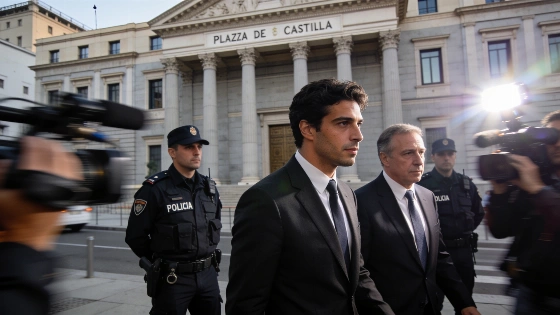
Vito Zoppellari Quiles, widely known as Vito Quiles, has announced he will present himself at the Plaza de Castilla courts in Madrid this Friday, accompanied by his lawyer. This follows a period in which his whereabouts were unknown after police attempted to detain him at the physical headquarters of EDA TV, his last registered address. The search was initiated by an order from Madrid’s Court of Instruction No. 32, presided over by Judge Rosa María Freire, after Quiles failed to attend two scheduled court hearings related to a criminal complaint for an alleged offense against honor.
The case centers on accusations that Quiles disseminated false information about a public employee, specifically alleging—without evidence—that the individual had served prison time and was released due to the intervention of the government’s second vice president. These claims, made on Telegram and TikTok, are described in the January complaint as entirely unfounded. The legal action, previously undisclosed, charges Quiles with spreading a falsehood that could damage the reputation of a civil servant.
Quiles himself publicized the existence of the arrest warrant on social media, using the situation to draw connections between the legal proceedings and his political views, though no supporting evidence has been presented. On Thursday, he posted a photo by a swimming pool, referencing the ongoing investigation into the director of the Guardia Civil and her deputy, and inviting government officials to “cool off” at his pool. This public response has added a layer of controversy to the unfolding legal process.
The incident comes at a time of heightened scrutiny of public figures and officials in Spain. Recent months have seen several high-profile legal cases involving accusations of misconduct and the spread of misinformation. For example, the government’s handling of internal investigations within the Guardia Civil has also been under the spotlight, as highlighted in a related report on the prime minister’s support for the director of the Guardia Civil amid ongoing inquiries (see details on the government’s stance regarding the Guardia Civil leadership).
Spain’s legal framework treats offenses against honor, including the dissemination of false statements that harm reputations, as serious matters. Such cases can lead to both criminal and civil proceedings, depending on the nature and impact of the alleged offense. The current case involving Quiles underscores the challenges authorities face in addressing misinformation on digital platforms, especially when it concerns public officials. The outcome of this case may influence future approaches to similar incidents, particularly as social media continues to play a significant role in shaping public discourse and legal accountability.