Jakarta’s main airport closed after Anak Krakatoa erupted, sending ash into the airspace. More than 22,000 passengers and 300 flights were affected, with airlines cancelling routes to major Asian and European cities.
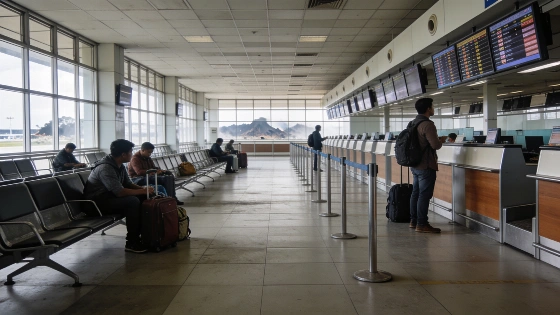
Jakarta’s Soekarno-Hatta International Airport closed suddenly after a large ash cloud from Anak Krakatoa drifted into its airspace, grounding hundreds of flights and leaving thousands of travelers stuck. Both domestic and international routes were affected. The airport operator reported that 301 flights, including 58 international connections, were suspended while authorities checked the risk to aircraft engines.
The eruption began late Friday and continued into Sunday, sending ash as high as 15,000 meters above Sumatra and 6,000 meters above Java, according to Indonesia’s meteorological agency BMKG. Ash spread across several provinces, including Banten, West Java, Jakarta, Lampung, and Bengkulu. Airlines such as Singapore Airlines and Malaysia Airlines cancelled all remaining flights to and from Jakarta for the day. Indonesian authorities extended the airport closure several times, with the latest extension lasting until 21:30 local time on September 6, as ash continued to drift over the capital.
A 'paper test' conducted between 00:35 and 01:05 local time officially confirmed the presence of volcanic ash in the airport's airspace.
The Directorate General of Civil Aviation said 22,798 passengers were directly affected by the closure. Major international routes to cities like Singapore, Hong Kong, Sydney, Seoul, Doha, Amsterdam, and Kuala Lumpur were disrupted. Domestic flights to destinations such as Denpasar (Bali), Lampung, and Surabaya were delayed or cancelled. The airport’s operator, Angkasa Pura, kept extending the suspension as the ash cloud lingered, focusing on safety while the situation changed. According to Channel NewsAsia, the first wave of restrictions affected at least 33 flights, including 16 international cancellations and 7 delays, with updates as the day went on.
Indonesia’s Geological Agency said there was no tsunami risk this time, unlike in 2018 when Anak Krakatoa’s partial collapse caused deadly waves that killed over 400 people. The agency’s director, Lana Saria, said the volcano’s current structure is stable, with no signs of collapse or further major events. The eruption had stopped by Sunday, but the airport remained in chaos as officials tracked the ash and worked with airlines. Authorities said aviation safety was the main concern, with ongoing coordination between airlines, air traffic controllers, and meteorological services to monitor the ash cloud.
Anak Krakatoa, or "Child of Krakatoa," rose from the sea in 1927, decades after the 1883 Krakatoa eruption that killed more than 36,000 people. The volcano sits in the Sunda Strait between Java and Sumatra and is closely watched because of its history of sudden eruptions. Indonesia, an archipelago of about 17,000 islands, sits on the Pacific Ring of Fire and experiences frequent earthquakes and volcanic activity.
The latest disruptions affected not only local flights but also major international routes, including those to Singapore and other key regional hubs, highlighting the broader regional impact and potential knock-on effects for connecting flights and onward travel.
The eruption and airport shutdown show how vulnerable Indonesia’s transport system is to natural hazards. Nearly 23,000 travelers were left waiting and major international connections were cut, exposing the logistical challenges in a region where volcanic activity is common. While authorities moved quickly to avoid a repeat of past disasters, the economic and operational impact from a single eruption remains high. For a country that relies on air travel for tourism and business, the Anak Krakatoa incident is a reminder that nature still sets the pace of daily life in Indonesia.