Ursula von der Leyen prepares for a pivotal address as the EU faces hybrid attacks, migration tensions and shifting alliances. The presence of Canada’s prime minister signals a recalibration of global partnerships.
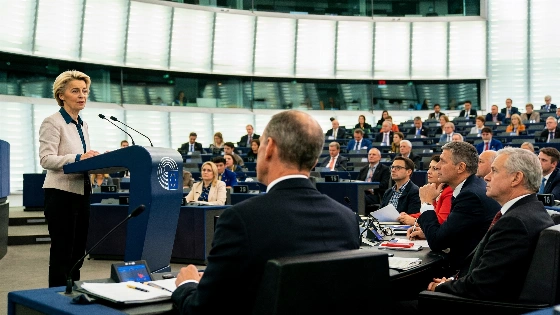
Ursula von der Leyen heads into the European Parliament this week with her political standing on the line and the European Union facing pressure from several directions. The latest incident: a drone from Belarus crossed into Lithuanian airspace and was shot down by allied jets. Lithuanian authorities and NATO reported that the drone, likely launched from Belarus, was intercepted and brought down near Priatkunai in the Kaišiadorys district on the night of September 15. This was the first time a drone had been shot down over Lithuanian territory, according to the Lithuanian military and crisis center.
Just hours later, Parliament turned to the fallout from the Ceuta crisis, which has fueled eurosceptic arguments and exposed divisions within the EU. NATO officials have linked the Lithuanian drone incident to a broader pattern of increased threats along the alliance’s eastern border, noting that these airspace violations are part of a series of events tied to the ongoing war in Ukraine.
Lithuania’s defense minister, Robertas Kaunas, stated that preliminary data indicated the intercepted drone likely did not contain explosives.
Von der Leyen’s annual State of the Union speech comes at a tense moment. This year, Canadian Prime Minister Mark Carney will be in Strasbourg, not just as a guest but to pursue a deeper alliance with the EU. Carney’s visit reflects a shift in global partnerships as both Brussels and Ottawa adjust to unpredictable US trade policy. According to the Canadian government, Carney’s trip from September 15–17 includes a speech to the European Parliament at Roberta Metsola’s invitation, participation in von der Leyen’s address, and meetings with MEPs to discuss trade, investment, and security. Carney has been in a trade dispute with Washington for weeks, while von der Leyen has managed to avoid a tariff war with the US through a fragile agreement with Donald Trump—an arrangement that cost her political leverage and has not stopped further threats from the White House.
Europe’s economic challenges extend beyond North America. The EU’s trade deficit with China is growing, now driven more by Chinese technology exports than just low-cost goods. Germany, long the economic driver of Europe, has been caught off guard by this change and is now pushing for a tougher approach to Beijing, working more closely with France to demand stricter trade policies. While recent reports confirm the EU plans to take a firmer stance on China, no new official figures on the deficit have been published.
Inside Parliament, von der Leyen faces a pro-European majority that is narrow and increasingly unstable. Her party has repeatedly made deals with the far right, especially on migration and deregulation, which has alienated social democrats and greens. Migration remains a flashpoint. The Ceuta crisis dominated a recent debate and has become a rallying point for those calling for a unified emergency response. Conservative leaders want new tools and faster action on the Migration and Asylum Pact, which has already led to more deportations.
The timing of Carney’s visit and von der Leyen’s address is seen by international observers as a coordinated signal of deepening EU-Canada ties, especially as both sides reassess their trade and security priorities in light of global instability.
Some of von der Leyen’s earlier promises remain unfulfilled. Her pledge to suspend the commercial part of the EU’s cooperation agreement with Israel stalled in the Council, despite growing support from socialists and greens. The Draghi plan to boost European competitiveness is also behind schedule, with the Bank of Spain estimating only 16% of it has been implemented. These delays have weakened confidence in the Commission’s ability to deliver.
With elections coming up in France, Spain, Italy, Poland, and Finland, the risk of further gains by eurosceptic parties is real. The next three years of von der Leyen’s term may be shaped by how she handles migration, trade, and shifting alliances. Iratxe García Pérez, the Parliament’s social democrat leader, has openly called for loyalty from coalition partners for the rest of the term, underlining how fragile the current majority is.
As the EU faces more external and internal challenges, the need for clear leadership is growing. The Ceuta crisis remains at the center of debate, with ongoing arguments about border security and the role of national governments. For context, the judiciary’s call for urgent action on Ceuta’s borders was reported earlier, showing the level of concern about the EU’s ability to respond to hybrid threats and migration pressures.
Von der Leyen’s speech will be judged by what actions follow, not just words. Mark Carney’s presence signals a strategic shift, but the EU’s credibility depends on delivering where past promises have fallen short. In the coming months, von der Leyen will have to show whether she can steer through these political challenges or if the EU’s divisions will deepen, leaving the bloc exposed to both outside pressure and internal dissent.