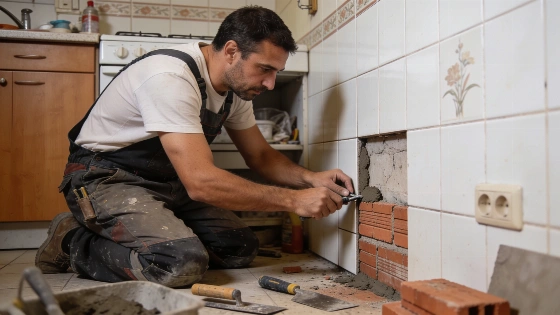
Marcos Silva, a Bilbao-based bricklayer, argues that taking on €50 jobs can make sense during slow periods. He highlights the realities of freelance construction work in Spain, where staying active and covering costs often outweighs waiting for bigger contracts.
When construction work slows down, Marcos Silva, a bricklayer and content creator from Bilbao, doesn't hesitate to accept small jobs—even those paying just €50. For Silva, the decision is practical: it's better to earn something than to let a day go to waste. He makes clear, however, that this is not his standard rate, nor does he recommend working every day for such a sum. Instead, he sees these occasional jobs as a way to stay active and fill gaps in his schedule.
Silva's reasoning is straightforward. "It's better to make €50 than lose €10," he says, challenging the idea that professionals should never leave home for less than €300. He stresses that accepting a one-off, low-cost job doesn't mean lowering his overall pricing. Rather, it's about making the most of downtime, not undercutting the market or devaluing his skills.
Understanding the Real Costs
Not all €50 jobs are created equal. A quick repair nearby, with minimal materials and no need for a second visit, can be worthwhile. But if the task requires hours of work, expensive supplies, travel, or multiple trips, the economics change. Silva points out that clients often overlook the hidden time and costs: site preparation, cleanup, waste removal, and even the initial visit to assess the job. These factors all eat into the final earnings.
For self-employed workers, the headline figure is rarely what ends up in their pocket. From each €50, a bricklayer must deduct materials, fuel, tools, protective gear, administrative costs, and taxes. Social security contributions also apply, with 2026 regulations setting minimum bases depending on net income. For example, a €50 job with €15 in materials and €10 in travel leaves just €25 before taxes and social charges.
Construction Salaries and Sector Trends
According to the latest data from Spain's National Statistics Institute (INE), the average annual salary for qualified construction workers reached €24,445.11 in 2024—a 4.8% increase from the previous year. This figure, however, is an average across the sector and doesn't reflect the wide range of earnings among individual workers, especially freelancers. The real take-home pay depends on job type, hours, location, and whether the worker is salaried or self-employed.
The construction sector itself remains robust, with 1.61 million people employed in the second quarter of 2026—up 5.7% from the previous year. Yet the industry faces a generational challenge: only 11.2% of workers are under 30, while nearly 10% are over 60. Demand for skilled bricklayers remains high, but the number of young entrants is still limited.
Why Small Jobs Still Matter
For many in the trade, small jobs are a way to keep income flowing and skills sharp during quieter periods. Silva's approach reflects a broader reality for Spain's self-employed: flexibility and adaptability are often more valuable than holding out for the perfect contract. While €50 won't cover a full day's work, it can make sense for a quick, local task—especially when the alternative is no work at all.
As the construction sector continues to evolve, the ability to balance large projects with smaller, opportunistic jobs may become even more important. For now, Silva's pragmatic stance offers a window into the day-to-day decisions faced by thousands of Spanish tradespeople navigating an unpredictable market.