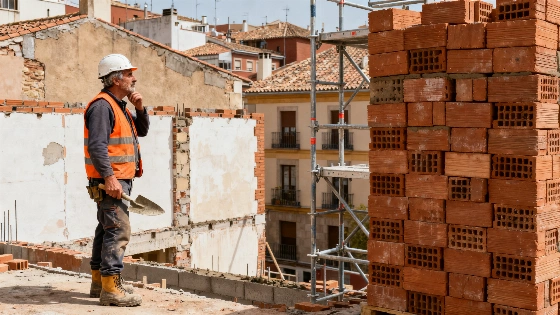
“Speak English to the Bricks”: How Experienced Builders Are Being Pushed Out of the Market. A 64-year-old Madrid builder with five decades of experience has faced an unexpected requirement—fluency in English. His story highlights how formal criteria are preventing the industry from attracting new workers and retaining seasoned professionals.
"I didn't know we now have to speak English to bricks," remarks the 64-year-old Madrid construction worker with irony. He has been working on building sites since the age of 14. His surprise is understandable: despite a severe labor shortage, employers are increasingly setting requirements for candidates that have little to do with the actual reality of the construction site.
Recently, he responded to a job posting from the municipality. Weeks later, he received a reply: they were looking for someone with English skills. For a man who has spent decades building homes and roads, such a demand seems absurd—especially when the industry is literally kept afloat by people approaching retirement age.
The generational shift problem
According to the Fundación Laboral de la Construcción, only 10% of construction workers in Spain are under 30. The rest are over 50, like the protagonist of this story. He notes: "In my crew, only one guy is under 30; the rest passed that milestone long ago."
The reasons are clear: young people are in no hurry to become helpers, and entry-level salaries rarely exceed 1,200 euros. Many ask about pay right away and aren't willing to work for such amounts. As a result, building sites are facing a severe staff shortage, and experienced craftsmen are being forced to compete with formal requirements that are not always justified.
Immigration and new rules
In the face of a labor shortage, migrants are playing an increasingly important role. They take on jobs that locals refuse, gradually replacing the outgoing generation of specialists. But even for them, new requirements—such as language proficiency—become a barrier. This creates a paradox: the industry needs workers, but because of formal filters, some experienced people are left out.
This conflict between the real needs of the market and bureaucratic criteria is becoming increasingly evident. As one interviewee notes, “Building walls and explaining something in English are not the same thing.”
Money and inflation
Another pressing issue is rising prices. According to a construction worker, over 20 years his salary increased by only €100, while the cost of living has multiplied. “You used to be able to buy a lot with 400 pesetas, now it’s not even enough for coffee,” he says. Such a gap between income and expenses is making the profession less and less attractive to young people.
What matters when choosing a job
Experts advise carefully studying the conditions of a job opening: not only the salary, but also the category, additional requirements, location, and the employer. Especially when it comes to municipal or government construction projects—formal criteria there can often be unexpectedly strict.
The question of whether it’s justified to demand that experienced builders know English remains open. Against the backdrop of a personnel crisis, such filters appear not only absurd, but harmful to the industry. However, as European Commission's forecast for Spain's economic growth, the construction sector remains one of the main drivers of the market — despite all internal contradictions.
For now, experienced craftsmen like the Madrid hero continue to work, facing not only physical exhaustion but also new, sometimes absurd, rules of the game.