Madrid Considers Abandoning Granite in Urban Landscaping. Authorities and architects in Madrid are debating the future of the city’s public spaces. Granite surfaces intensify heat and hinder the development of green areas. Experts propose changing approaches to materials and urban landscaping.
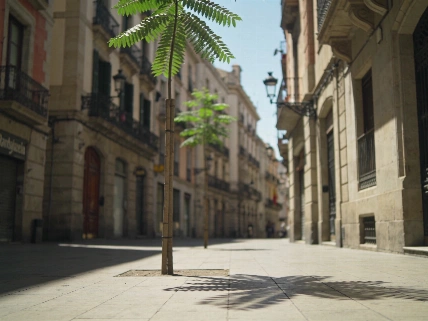
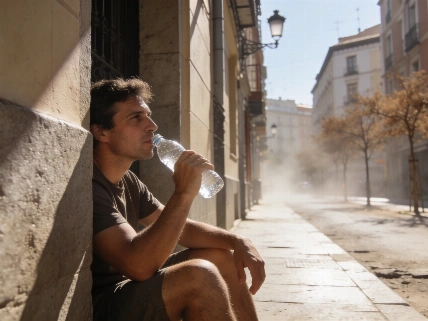
A debate has erupted in Madrid about the future of urban spaces: architects and local officials are discussing whether to continue the widespread use of granite in the development of streets, squares, and public areas. The reason is growing criticism of the city's 'mineral' landscape, which, according to experts, intensifies the urban heat effect and hinders the creation of a more comfortable environment for residents.
Granite: Symbol and Challenge
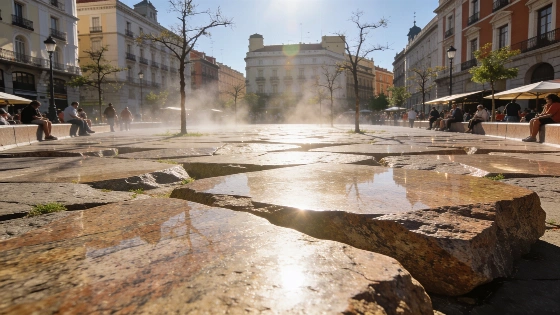
For decades, granite has been the main material for paving and finishing in Madrid. It was quarried nearby, and the tradition dates back to the era of Philip II and the construction of El Monasterio de El Escorial. Today, however, architects point out that granite surfaces create continuous 'hard' areas that poorly absorb water and barely support the urban ecosystem. As Andrea Buchner from the RCR architectural firm notes, the city is increasingly resembling an object rather than a living organism: granite accumulates heat during the day and releases it slowly at night, intensifying the 'heat island' effect and raising nighttime temperatures.
Historical Roots and Modern Disputes
Many experts link the popularity of granite to the architectural choices from the Franco era, when the material symbolized strength and authority. COAM dean Sigfrido Herráez notes that the widespread use of granite has become a legacy that is hard to abandon. At the same time, modern architects debate the advisability of its use: some consider granite more affordable, while others point to the advantages of new ceramic and eco-friendly materials.
Practical implications for the city
The issue is not only about aesthetics, but also about urban comfort. Granite squares and sidewalks absorb little water, do not foster the growth of green spaces, and do not regulate the microclimate. Geologists emphasize that different types of granite reflect sunlight differently, and dark varieties with a high content of black mica heat up especially strongly. Alternatives such as local limestones often lag behind in quality, limiting the choice of materials for landscaping.
In search of a new balance
The architectural community proposes rethinking the approach to shaping urban spaces. Instead of using granite everywhere, experts recommend introducing more porous surfaces, integrating greenery, and selecting materials that age harmoniously and interact with natural cycles. Granite, meanwhile, is not being completely excluded—the idea is to reduce its dominant role and create a more flexible, dynamic urban environment.
The issue of choosing materials for urban spaces in Madrid has repeatedly attracted public attention. For example, new commemorative stones have recently appeared in residential neighborhoods of the capital, as reported in the article about the installation of memorial stones in Vallecas. This highlights that the issue of the urban environment is not only about comfort, but also about memory, identity, and the attitude towards history.