After nearly a year living exclusively in a motorhome, José and Patri, online personal trainers from Málaga, have shifted to a hybrid lifestyle. They now divide their time between traveling and a small rented house in Cádiz, reflecting on the realities of life on the road.
When José and Patri left their rented apartment in Málaga to live full-time in a motorhome, they were searching for more than just a change of scenery. Between March 2024 and February 2025, the couple, known for their online fitness coaching and the channel Aventuras Jose y Patri, made their six-meter vehicle both home and office, adapting their work and daily routines to a life constantly on the move.
The decision to abandon traditional housing was not sudden. Exhausted by overwork in 2022, they began with weekend van trips, gradually expanding their journeys across Andorra, France, and the Alps. A summer spent visiting clients in Switzerland convinced them to upgrade to a larger, more comfortable vehicle. Their first van, lacking heating, proved inadequate during cold spells, prompting them to invest in a nearly new motorhome after weighing the costs and timelines of self-conversion versus purchase.
Financial considerations played a significant role. Rather than continuing to pay rent without building equity, José and Patri preferred to put their monthly budget toward a vehicle they owned, hoping to recover some of the investment through resale. However, as they acknowledge, the real cost-effectiveness of this choice is difficult to measure without factoring in purchase price, insurance, repairs, fuel, and depreciation—details they have not fully disclosed.
Adapting to Life on the Road
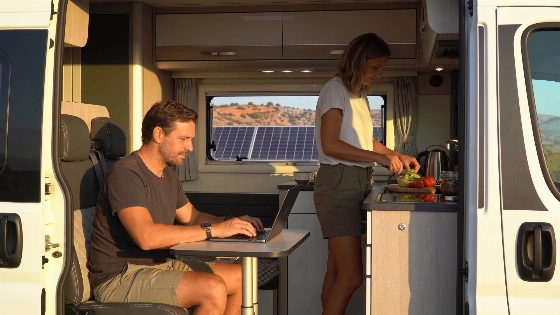
Their motorhome, about six meters long, was outfitted with two solar panels (330 watts total), an L-shaped kitchen, a compact living area, and carefully organized storage. They imposed a strict three-kilo limit on items in overhead compartments to prevent accidents while driving. The couple continued to run Málaga Entrena remotely, coaching clients online and producing content about fitness and van life. Their mobility allowed them to visit students and organize training sessions across Spain and Europe, but it did not free them from the demands of their business. Work still meant answering messages, planning routines, and managing schedules—now complicated by travel, weather, and the logistics of finding water, disposing of waste, and maintaining the vehicle.
Living in such a confined space required constant adaptation. Setting up and packing away their workspace, managing limited resources, and sharing a few square meters for cooking, working, and resting proved challenging. The couple openly admits that the romantic idea of life on wheels often clashes with the practical realities of daily life in a motorhome.
Shifting to a Hybrid Model
Despite the widespread narrative that José and Patri had permanently traded bricks for wheels, their own timeline tells a more nuanced story. After a year of continuous travel, they opted for a hybrid approach, renting a small house in Cádiz as a base and alternating between stationary and mobile living. By November 2025, they were spending roughly six months in each location. In June 2026, they announced on Instagram and YouTube that they had paused full-time van life to focus more on Málaga Entrena and restore balance between work, personal life, and travel. The motorhome remains part of their projects, but it is no longer their sole residence.
This evolution reflects a broader trend among remote workers seeking alternatives to conventional housing. However, as their experience shows, the flexibility of van life comes with its own set of trade-offs, and the idealized freedom is often tempered by practical and financial constraints.
Costs, Rules, and Practical Advice
Comparing the cost of renting to owning a motorhome is not straightforward. Beyond the monthly payment, owners must budget for financing, insurance, fuel, maintenance, repairs, gas, internet, and campsite fees. Depreciation and the need for alternative accommodation during repairs add further complexity. Regulatory changes, such as the 2026 update from Spain's Dirección General de Tráfico, distinguish between parking and camping, with local authorities able to restrict overnight stays outside designated areas.
Rising rental prices provide context for the couple's decision. According to the latest INE data, rents in Andalucía rose 3.8% in 2024, with Málaga city seeing a 5.2% increase and a cumulative 32.7% rise since 2015. For those considering a similar move, José and Patri recommend renting a motorhome for a week or ten days before committing, to test the realities of space, resource management, and daily routines.
Their story highlights the possibilities and limitations of remote work and mobile living in Spain. While van life can offer flexibility and adventure for those with geographic freedom, it is not universally cheaper or easier. The true cost and comfort depend on individual circumstances, travel habits, and the willingness to adapt to a constantly changing environment.