Spain Left Without a New Fighter Jet: FCAS Failure and F35 Rejection. Spain faces uncertainty after the collapse of the European FCAS project and the rejection of American F35s. The government’s decision impacts the future of military aviation and the capabilities of the fleet.
Spain is facing significant uncertainty over the renewal of its combat aviation fleet after the official collapse of the European FCAS project and Prime Minister Pedro Sánchez's government's refusal to purchase American F-35s. The decision to end cooperation on FCAS was made by France and Germany without Madrid's participation, highlighting Spain's limited influence on the EU's strategic defense initiatives.
FCAS, conceived as a joint development of a sixth-generation fighter with equal participation from France, Germany, and Spain, was blocked due to disagreements over the distribution of roles and technologies. For a year, the project saw virtually no progress, and public statements from Dassault and Airbus only reinforced the sense of deadlock. Spain, represented by Indra, tried to ease the conflict but was left out of key decisions.
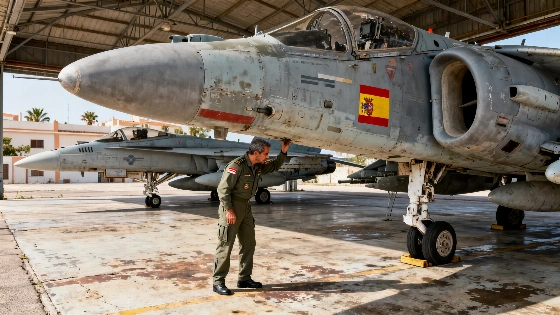
The official termination of FCAS was a blow to the Spanish Armed Forces. In the coming years, the navy and air force will have to seek temporary solutions: the service life of the Harrier for the navy has been extended until 2032 by purchasing five decommissioned aircraft from the US to be used for spare parts. However, after that, Spain risks losing its carrier-based aviation capability, as the only modern vertical takeoff aircraft—the F-35—has been excluded from procurement plans for political reasons.
The rejection of the F35 was explained by a focus on developing the European defense industry, but in practice it led to Spain being in the minority: 13 European countries either already operate or are expecting deliveries of the F35, including Germany, Italy, the United Kingdom, Poland, Greece, and others. By comparison, the Spanish Navy and Air Force are forced to rely on outdated models and temporary measures.
The Air Force plans to replace the F18 with the Eurofighter as part of the Halcón II program, but this will leave only one type of combat aircraft in service. This approach has raised concerns within the military, as Spain is effectively dropping out of the group of countries with modern fifth and sixth-generation fighters.
Against this backdrop, Spanish defense companies — Indra, Airbus, GMV, Oesía, Sener, and ITP Aero — have issued a statement expressing their readiness to continue work on a new generation of aviation systems. However, further prospects depend on new alliances and decisions, and time is not on Madrid's side.
The issue of military spending and priorities in defense policy remains relevant for Spain. According to a recent survey, most of the country's residents do not consider the defense budget excessive, and support for the government's security and defense policy is growing — details in the report on russpain.com.
For reference: the Harrier is the only vertical takeoff fighter suitable for use on the Spanish ship Juan Carlos I. The F35B is the only modern alternative, but its purchase is blocked. The Eurofighter is the main European fourth-generation fighter, gradually replacing the outdated F18s. Decisions regarding the future of Spain’s combat aviation directly impact the country's defense capability and its role in European and NATO structures.