Spain has already lost 226,391 hectares to wildfires in 2026. This is 38% more than last year by the same date. Authorities warn of a challenging season as heat records and early fire outbreaks strain emergency response.
Spain is facing a severe wildfire crisis in 2026, with 226,391 hectares already scorched since January, according to provisional data from the Ministry for the Ecological Transition and Demographic Challenge. This marks a 38% increase compared to the same period in 2025, when 140,000 hectares had burned. The rapid escalation has made this summer one of the most difficult in recent memory, as noted by Sara Aagesen, Third Vice President and Minister for the Ecological Transition, who highlighted the unusually early start to the fire season and record-breaking temperatures.
Official figures show that 43 major wildfires—each affecting more than 500 hectares—have been recorded so far this year. These incidents are described as particularly aggressive and intense, a significant jump from the 24 large fires registered by this point in 2025. Last year was already considered the worst for burned territory since 1994, with a total of 354,793.5 hectares lost by the end of the season. The most dramatic surge in 2025 occurred between August 5 and 19, when burned land soared from 47,198 to 367,520 hectares, driven by extreme heat, drought, and abundant dry vegetation.
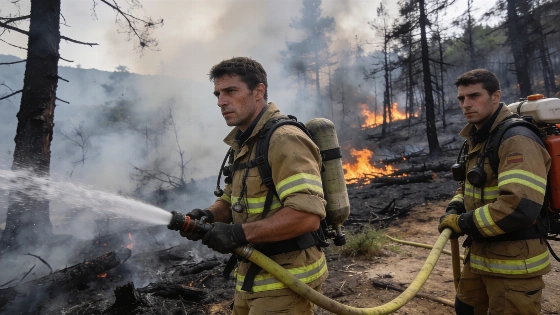
Current efforts are focused on active fires in Niebla (Huelva) and Las Peñas de Riglos (Huesca). In Huelva, several municipalities have implemented preventive measures, including closing facilities and suspending outdoor events and festivities due to smoke from the Niebla fire, which has been burning for over five days. Meanwhile, in Las Peñas de Riglos, more than 500 personnel and 22 aerial units are working to contain a blaze that has already affected around 5,200 hectares. The Ministry remains vigilant in other regions as well, given the ongoing risk.
Authorities are also urging caution ahead of Wednesday’s solar eclipse, with the Minister calling for maximum prudence as large numbers of people are expected to gather outdoors. The combination of high temperatures, early fire outbreaks, and increased public activity is adding pressure to emergency services across the country.
Spain’s wildfire crisis is unfolding alongside other environmental and policy challenges. For example, recent disputes over renewable energy expansion in Catalonia have highlighted the complexity of balancing ecological protection with development, as seen in the recent conflict between local authorities and the rollout of new energy projects. The current wildfire season underscores the urgent need for coordinated action and adaptation as climate extremes become more frequent.
Wildfires are a recurring threat in Spain, particularly during hot, dry summers. The country’s geography, vegetation, and climate make it especially vulnerable, and the increasing frequency of large-scale fires is raising concerns about long-term environmental and economic impacts. Effective prevention, rapid response, and public awareness remain critical as Spain navigates another challenging fire season.