A 64-year-old woman died after being gored by a bull during Ayna’s festival run. Emergency teams intervened but could not save her. The tragedy forced the suspension of all planned festivities.
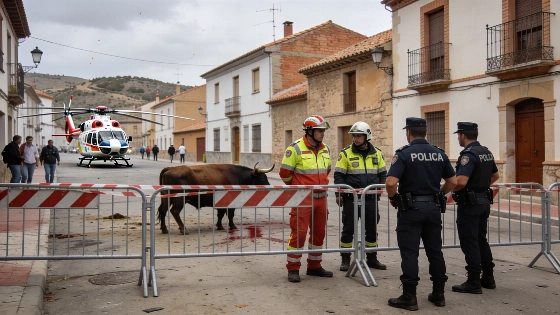
Festivities in Ayna, a small town in Albacete, came to an abrupt end after a 64-year-old woman was killed during the first bull run of the local patronal festival. She was outside the protective barriers and directly in the bull's path when she was struck. Medical teams responded quickly and a helicopter was dispatched, but her injuries were too severe and she died before reaching the helipad.
The emergency services received the call at 10:55 a.m., and despite immediate medical intervention and helicopter deployment, the woman died en route to the helipad.
Emergency services were alerted at 10:55 a.m. and sent a medical helicopter to the scene. On-site health workers tried to stabilize her, but the wounds were fatal. In a separate incident during the same event, a man in his sixties was also gored in the arm by another bull at a different spot along the route. He survived and received treatment.
According to official statements cited by Demócrata, the woman was participating in the very first bull run of the festival series, and her fatal encounter occurred outside the designated safety barriers in the Las Cuevas area. The municipal government immediately canceled all events for the day, and the incident is expected to influence the remainder of the festival program.
Tragic accidents at public events are not unique to Ayna. Similar incidents, like the recent fatality in Alzira, show the ongoing dangers at traditional gatherings across Spain. Bull runs are a longstanding part of regional culture, but the risks for both participants and bystanders are clear.
Spain’s festival season brings together locals and visitors for traditions that go back centuries, but when safety measures are ignored, preventable tragedies happen. The events in Ayna highlight the need for clearer rules and better enforcement at public festivities involving animals. When authorities have to suspend celebrations after such incidents, it is a clear sign that tradition cannot override basic safety. Local leaders and organizers now face the task of making sure future events do not repeat these mistakes.