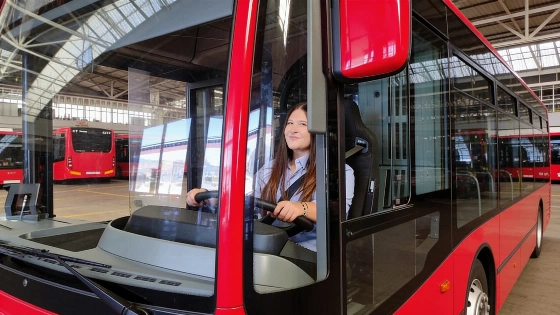
At 25, Verónica Barallobre Ferreira is the youngest urban bus driver in A Coruña. She challenges old stereotypes and brings a new face to a job still ruled by men. Empathy and a positive attitude matter most in a role that demands grit.
Most drivers at Tranvías in A Coruña are men. Out of 282 bus drivers, only 28 are women. Verónica Barallobre Ferreira, just 25, is the youngest of them all. She stands out in a workforce where men fill 254 of the driver seats. Tranvías, the city’s main bus company, employs 321 people in total. The numbers show how wide the gender gap still is.
Barallobre did not wait long to get behind the wheel. She got her car license at 20. Before buses, she worked in hospitality and cleaning. But the road called to her. Her uncle, a Tranvías driver, encouraged her to try. She finished her training and passed every exam on the first try. Three and a half months ago, she joined the company. Local media took notice. Women rarely drive city buses here.
The latest available figures confirm that among the 282 bus drivers at Tranvías in A Coruña, only 28 are women, underlining the significant gender gap in the profession.
Her first shifts were on the university line. Summer was quiet. She still drives that route most days. Sometimes, she covers other lines. She adapts fast. "You have to enjoy driving and be ready to handle stress, roadworks, people in a hurry, and all kinds of personalities. It takes people skills," she says.
The city itself is the real test. Narrow streets. Badly parked cars. Surprises at every turn. "It’s like a gymkhana. Every day brings something new to learn," she says. Still, she finds joy in the job’s human side. "A really pleasant passenger can make my day. I always try to greet people with a smile. If someone responds in kind, it makes the work much more enjoyable, especially in times when empathy is in short supply." One kind word can change everything.
Driving a bus is still seen as a man’s job. Taxi and truck driving too. But Barallobre sees things shifting. "Society still has some macho attitudes, but women are no longer frowned upon for taking the wheel of something as big as a bus or a truck. Society evolves, and women are daring to do more," she says. Change is slow, but it’s real.
According to a recent publication dated September 27, 2026, Verónica Barallobre Ferreira is recognized as the youngest female bus driver in A Coruña, having joined Tranvías just 3.5 months ago. No official statements from the operator or city authorities have been found regarding her hiring, and the proportion of women drivers at Tranvías remains at 28 out of 282, with no recent evidence of significant changes.
People are often surprised when they hear what she does. Friends and strangers ask if she is scared to drive such a big vehicle or squeeze through tight city streets. Her answer is simple. "The bus doesn’t scare me, but it does command respect. We are responsible for many lives." She does not take that lightly.
Barallobre wants to drive the busiest lines in the city. The 2A and the 22 connect key neighborhoods and hospitals. She laughs at the idea of being daunted by the busiest routes. She is ready for whatever comes next. Nothing fazes her.
Her story stands out against the bigger picture for Spanish drivers. As reported earlier, many learner drivers in Spain fail their tests the first time. It takes determination to succeed in this field. Barallobre has it.
Empathy, adaptability, and professionalism guide her. If more women followed her path, the sector could look very different. Her presence behind the wheel is more than a personal win. It shows that old barriers are starting to fall. In a city where most drivers are still men, her example proves change is possible. The future of public transport may not look like its past.