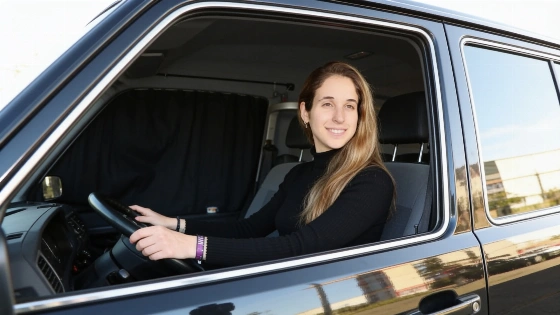
Andrea García became Spain’s youngest female truck driver at 21. Her first routes forced her to master a 21-pallet Scania through Barcelona’s dense traffic, challenging stereotypes and outdated industry rules.
Andrea García started her trucking career in the thick of Barcelona’s traffic, not on quiet country roads. At 21, she was behind the wheel of a new Scania rigid truck, loaded with 21 pallets, weaving through the city’s crowded streets. Congestion, unpredictable motorbikes, and impatient pedestrians left little margin for error. For García, every delivery demanded focus and quick reflexes.
Her first weeks were tough. She handled supermarket logistics, loading goods in the warehouse and delivering directly to stores. Navigating the Diagonal during rush hour meant dealing with motorcycles cutting in and drivers ignoring the rules. The size of the truck made every risk feel bigger, and she finished many days exhausted.
Women make up only 2%–3.8% of truck drivers in Spain, according to recent data from El Español, highlighting the rarity of such career paths for women in the sector.
But repetition built her confidence. Each day behind the wheel made her more comfortable, and the panic faded. Before driving trucks, García worked as a forklift operator in warehouses, moving pallets—a job that helped her adjust quickly to handling large vehicles. She was drawn to driving early on; by 18, she was already planning to get her heavy vehicle licenses, encouraged by her partner, now husband, who also drives trucks.
García’s progress stands out in a field where women are still rare. She often gets surprised looks, and sometimes open skepticism, from people who doubt her skills because she’s a woman. She responds with professionalism and patience, refusing to let others’ opinions define her. García hopes her example will encourage more young women to pursue their goals, regardless of stereotypes.
Her experience also highlights broader problems in Spain’s transport sector. García has spoken about the need for regulatory changes, including better pay in some areas, strict digital tachograph rules, and long working hours. These are issues other drivers have raised as well, as reported in recent news about the pressures and fines Spanish truckers face under current laws.
According to the European Commission, the Spanish logistics sector continues to face significant gender imbalance, with structural barriers limiting women’s entry and advancement. Independent Spanish media also report that female applicants for truck driving jobs receive interview invitations in only 15% of cases, compared to 25% for men with identical experience, reflecting persistent hiring discrimination.
Now 22, García is with her third transport company, working night routes and interprovincial trailer exchanges. She shares her experiences in interviews and on social media, aiming to show what freight transport is really like and to push for better working conditions. She plans to finish a higher degree in Transport and Logistics, hoping to move into management and balance her career with family life.
García’s story is unusual for the industry. She has learned the technical side of the job and also called attention to the cultural and regulatory barriers that remain in Spain’s trucking world. Her path shows that change often starts with one determined person, and that progress in the sector is slow but possible.