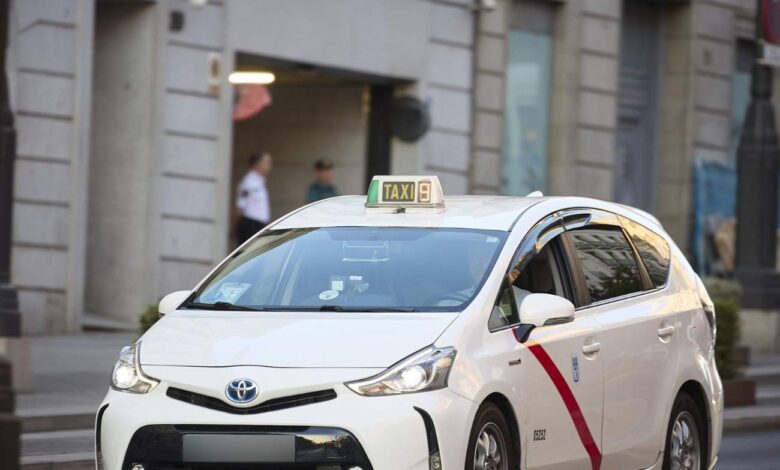
In 2025, the Spanish cities of San Sebastián, Lleida, and Tarragona topped the ranking for the most expensive city taxi fares. San Sebastián has maintained its lead for the third consecutive year, Lleida has risen to second place, and Tarragona returned to the top three after a one-year absence. These cities have set new records for costly rides, sparking concern among both locals and visitors.
Meanwhile, on the opposite end of the spectrum, Las Palmas de Gran Canaria, Huelva, Cádiz, and Melilla offer the most affordable taxi rates. In 2025, Huelva even surpassed Cádiz as the cheapest city for mainland Spain. The gap between the priciest and cheapest taxi rides across the country reaches 60%, and for short trips, the difference is more than double.
Record-breaking fares
Looking at the minimum fare for a 1 km ride on a weekday, it costs €6.26 in San Sebastián and just €3.02 in Zaragoza—a 107.3% difference. The variation in some fare categories is even more striking: starting rates during the day can vary nearly fourfold, from €1.25 in Ceuta to €4.94 in San Sebastián. At night, the picture doesn’t improve: minimum starting fare in Castellón is €1.50, while in San Sebastián it jumps to €5.22.
Nationwide, the average minimum daytime fare is €3.97, rising to €5 at night. Minimum rates in Lleida and San Sebastián remain consistently higher, while in Oviedo and Gijón they are slightly lower—though still noticeably above the national average.
Where taxis are cheapest
The lowest taxi fares in 2025 are reported in Las Palmas de Gran Canaria, Huelva, Cádiz, and Melilla. In these cities, the daytime rate per kilometer ranges from €0.77 to €0.85. At night, the lowest rates are maintained in Melilla, Ceuta, and Las Palmas de Gran Canaria—ranging from €0.85 to €0.90 per kilometer.
The top ten cities with the most affordable taxis also include Ciudad Real, Murcia, Madrid, and Barcelona. In the Catalan capital, for example, the minimum fare for a nighttime ride is just €2.75—the lowest among major cities.
Tariff details
Spain has a complex taxi fare system that varies not only between cities, but also depending on the time of day, days of the week, and even specific routes. For example, in San Sebastián, the daytime kilometer rate is among the lowest in the country (€0.88), but high starting and minimum ride fees result in a record-high final price.
In some cities, such as Sevilla, Madrid, and Barcelona, there are fixed fares or surcharges for trips to airports, train stations, and ports. In Sevilla, for instance, a ride to the airport costs at least €25.21 by day and €27.84 at night, while in Madrid, there is a fixed €33 fare for routes within the M-30.
Price increase trends
In 2025, 39 out of Spain’s 57 major cities raised their taxi fares. The sharpest increase was recorded in Palma de Mallorca—by 15.4%. In San Sebastián and Zaragoza, fares rose by 9.1% and 9% respectively. Nationwide, the average per-kilometer cost grew by 2.8% for daytime trips and 2.4% at night.
In some cities, the increase affected only specific categories—for example, in Pontevedra, only the cost per kilometer and waiting time rose. Overall, the trend of taxi fares going up continues, and the gap between cities with the highest and lowest prices is becoming increasingly apparent.
Hidden surcharges
Many cities continue to charge additional fees for trips to certain destinations—such as airports, train stations, and ports. Additionally, several cities have special night and weekend rates, which are especially notable in the Basque Country, Granada, Pamplona, and Seville. In Cáceres and Mérida, weekend night rates are even higher than those on weekdays.
Experts believe that such surcharges are not always justified, as the quality of service does not change depending on the time of day or day of the week. Nonetheless, passengers are forced to put up with these extra costs, especially when traveling to the airport or train station.
If you didn’t know, FACUA-Consumidores en Acción is a Spanish association focused on consumer rights protection. The organization regularly conducts large-scale studies of prices and rates across various sectors, including transportation, utilities, and food products. FACUA actively campaigns for tariff transparency and fair pricing, and fights against unjustified surcharges and hidden fees. Thanks to its work, many issues related to price gouging receive public scrutiny and oversight.