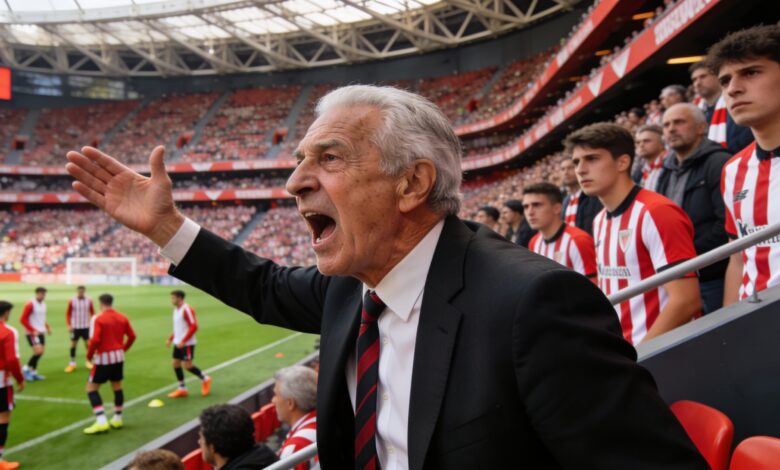
Debate reignites in Spain over how true Athletic Club remains to its roots. A controversial comment by a former team coach, who questioned the transparency of player selection, has triggered fresh discussion. For supporters and people in the Basque Country, the club’s identity has always been vital, as Athletic Club has long stood as a symbol of a unique approach to building its squad.
Now, as results take precedence over players’ backgrounds, many wonder if the club is losing what sets it apart. With sporting achievements increasingly outweighing tradition, such accusations could impact the reputation not only of Athletic Club, but of Basque football as a whole.
Doubts about fairness
The club’s former coach, who achieved significant victories with the team in the past, publicly claimed that Athletic Club is allegedly using loopholes to bypass its own philosophy. According to him, some of the players labeled by the club as ‘Basque’ were actually invited from other regions as teenagers and only formally joined local teams. Critics argue that this practice distorts the essence of the renowned Basque development system.
Speaking on the ‘Carrusel Deportivo’ program, the coach pointed out that the club increasingly recruits young footballers from other areas, then quickly registers them as homegrown Basque players. This has sparked discontent among some fans who believe such moves undermine trust in the club and its traditions.
In recent years, Athletic Club has indeed faced challenges in scouting new talent, as competition for young players intensifies. Some experts believe the club is forced to make compromises to remain competitive in La Liga.
Changes in the club atmosphere
According to a former coach, the internal atmosphere in the club is no longer what it once was. He notes that previously, all the players knew each other from a young age, whereas now more and more invited footballers are joining the team. This, he says, affects team unity and the fans’ connection to the club.
At the same time, the Athletic Club management emphasizes that the club still adheres to its philosophy, though it must adapt to new realities. In modern football, demands for results are stricter, and sometimes it is necessary to seek unconventional solutions.
According to RUSSPAIN, similar debates about identity and team-building principles are not limited to the Basque Country. Other regions of Spain also discuss how far traditions can be changed in the pursuit of success on the pitch.
Fans’ reactions and consequences
Many Athletic Club supporters are divided in their opinions. Some believe the club should strictly uphold its historical rules, while others are convinced that competing with the country’s top teams requires a certain flexibility. Heated debates about the future of Basque football traditions are taking place on social networks and forums.
Interestingly, similar debates have often arisen in Spanish sports. For example, a recent case involving a major literary prize sparked controversy over the fairness of new rules— details of this event can be found here. This demonstrates that questions of identity and tradition concern Spanish society not only in football but across other areas as well.
In recent years, Spanish football has frequently discussed how clubs adapt to new economic and sporting realities. Some teams have already faced criticism for trying to change their traditional approaches to building squads. In 2025, similar debates arose around a club in Galicia, where fans also objected to recruiting players from other regions. These situations show that preserving tradition remains important for many Spanish teams, and any changes spark strong reactions in society.