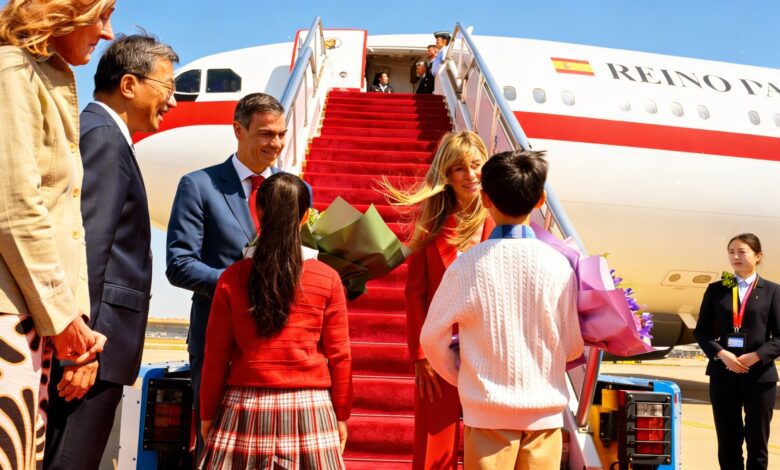
Spanish policy toward China is reaching a new level: Pedro Sanchez’s visit to Beijing in 2026 was not just another meeting, but an important step for the country’s entire economy. With US-China relations still tense, Madrid is betting on expanding cooperation with the Asian giant. This decision could impact the investment climate, export opportunities, and even Spain’s negotiating position with the European Union.
According to El Pais, this is Sanchez’s fourth trip in the past three years, but his first as an official state visit. This format highlights the maturity of relations between the two countries and creates new opportunities to discuss strategic issues. This time, Sanchez was joined by his wife, Begoña Gomez, who was invited to the official banquet—another sign of the high level of diplomatic engagement.
Economic outlook
The main goal of the trip is to ease access for Spanish goods to the Chinese market and attract investment into key sectors. Particular attention is paid to agriculture and industry, where Spain faces barriers and strong competition. Although exports have grown by 7%, the trade deficit with China exceeds 40 billion euros, and new US tariffs have only strengthened Beijing’s position in Europe.
The government notes that thanks to constructive dialogue with China, Spain avoided a total ban on its pork exports after the disease outbreak in Catalonia. Madrid now aims to further ease restrictions and establish joint ventures that will generate jobs and added value domestically. Plans also include developing technological alliances, including with companies like Xiaomi, and supporting innovative startups.
Diplomatic balance
The context of Sánchez’s visit differs from previous years: while closer ties with China once raised concerns in Washington, now European leaders are visiting Beijing one after another. In the coming weeks, Donald Trump is expected to arrive, and the leaders of France, Germany, the United Kingdom, and Canada have recently visited China. Spain seeks to maintain a balance between its alliance with the US and expanding its partnership with China, emphasizing that these are different types of cooperation.
Foreign Minister José Manuel Albares stresses that Madrid acts in close coordination with Brussels, despite Sánchez’s ambition to stand out on the European stage. Issues of market access, technological competition, and investment regulation are discussed at the EU level, but Spain works to leverage its advantages in promoting national interests.
Domestic political backdrop
While Sánchez is engaged in talks in China, domestic affairs remain in the opposition’s spotlight. In the prime minister’s absence, Deputy Prime Minister Carlos Cuerpo will chair the Cabinet meeting for the first time, and parliament will continue debating a corruption case involving the ruling party. However, Sánchez’s active foreign policy helps him maintain the initiative and divert attention from domestic scandals.
In the coming days, the head of government plans a series of international meetings: talks with the president of Brazil, a summit of progressive leaders in Barcelona, and participation in an informal EU meeting in Cyprus. Issues such as the Middle East war and Spain’s position on Iran remain in focus, as previously noted in coverage of the Cuban crisis’s impact on Europe— details on the risks facing the region.
Context and trends
In recent years, Spain has actively sought new economic and political partnerships to reduce dependence on traditional allies and strengthen its position on the world stage. High-level visits, such as Sánchez’s current trip to China, are part of a long-term diversification strategy. Other European countries have taken similar steps, reflecting a general trend toward multipolarity in international relations.
In 2025, France and Germany also strengthened contacts with China, signing a number of agreements in the fields of energy and transport. The United Kingdom and Canada focused on technological exchange and joint scientific projects. For Spain, the key issue remains job creation and boosting competitiveness, which is directly linked to the outcome of the talks in Beijing. According to russpain.com, such visits are shaping new rules of the game for European economies.