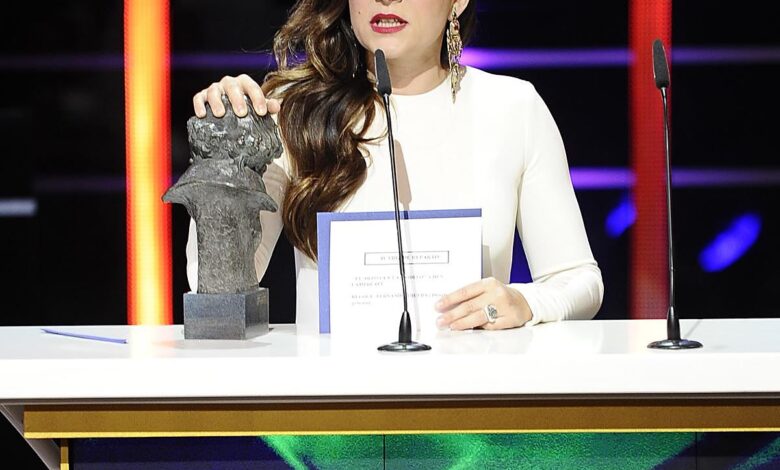
The fortieth anniversary of the Goya Awards has become more than just another date for Spanish cinema—it’s a true reflection of the changes and challenges facing the industry. Barcelona is hosting the milestone ceremony, where, despite having predictable winners, the passions surrounding the awards remain high. Once again, Spanish film is at the forefront of public attention, with sharp conflicts, protests, and even boycotts unfolding behind the scenes of famous names and the gleam of trophies.
This year, the frontrunners are ‘Los domingos’ and ‘Sirat,’ collecting the highest number of nominations. However, as Mujerhoy notes, the intrigue lies not so much in how the awards will be distributed but in how the ceremony mirrors the internal contradictions and moods within the professional community. Over forty years, the Goya Awards have repeatedly served as a stage for public disagreements, and at times real scandals, that have left a mark on the history of Spanish cinema.
High-profile disagreements
One of the most talked-about episodes remains the conflict between Pedro Almodóvar and the Film Academy. In the early 1990s, the director left the ceremony before the main award was announced, after his film went unrecognized despite a record number of nominations. Later, Almodóvar and his brother resigned from the Academy in protest against the voting system. Even years later, the relationship between the iconic filmmaker and the award organizers remained strained, and his return to the stage was met with renewed discussion.
Equally sensational was the case of José Luis Garci, who was suspected of trying to influence the voting results. Although the accusations were never proven, the director left the Academy and his film received only one out of thirteen possible awards. These events highlighted just how sensitive issues of fairness and transparency are in Spanish cinema.
Awkward moments and protests
Sometimes the Goya ceremonies were remembered not only for their winners but also for the unexpected actions of participants. In 2000, host Antonia San Juan, who did not receive the anticipated award, openly showed her disappointment, which sparked criticism from the organizers. In 2004, an attempt to limit the length of winners’ speeches led to a protest by Belén Rueda, after which the controversial measure was withdrawn.
In 2009, the ceremony turned into a real scandal: the statuette for Best Documentary was stolen right at the afterparty. It was later revealed to be an act of protest against nepotism and insularity in the industry. In 2011, actress Leonor Watling became the target of an egg attack during a demonstration against cultural policy—one of the most talked-about moments in the award’s history.
Social challenges and new faces
The Goya Awards have repeatedly served as a platform for discussing pressing social issues. In 2013, actress Candela Peña, accepting her award, spoke emotionally about the hardships faced by actors and ordinary citizens—lack of jobs, problems in healthcare and education. Her speech sparked widespread public response and became a symbol of the fight for change.
In recent years, the awards have faced new challenges. In 2025, actress Karla Sofía Gascón was not invited to the ceremony due to controversial statements on social media. Nevertheless, her name became the most discussed on the red carpet, with colleagues expressing their support. Such incidents show that the Goya Awards remain not only a celebration of cinema but also a stage for debating contemporary issues.
The Goya Awards are more than just an annual prize ceremony—they reflect the complex changes taking place within Spanish society and culture. Over four decades, they have become a symbol of transformation, a venue for open dialogue, and a mirror of an entire era’s sentiments. Every new scandal or unexpected act only proves that Spanish cinema continues to thrive and evolve despite any obstacles.
The Goya Awards are Spain’s premier film accolade, established in 1987 by the Film Academy. Its statuette has become a symbol of recognition for directors, actors, and screenwriters, while the ceremony itself serves as a platform to discuss not only the art of cinema but also pressing social issues. Over the years, the awards have changed formats, faced criticism and reforms, yet have consistently remained at the heart of national attention. Thanks to the Goya Awards, Spanish cinema has gained international recognition and become an integral part of Europe’s cultural heritage.