The European car market is rapidly evolving, and Dacia is once again at the center of attention. The company is not limiting itself to its usual models and is preparing two new offerings that could shift the balance of power in the affordable vehicle segment. Soon, a compact city electric car priced at around 18,000 euros will appear, as well as a spacious family crossover designed for those seeking more room and versatility.
Interest in the brand is growing in Spain: in 2025, Dacia’s sales increased by 20%, and for the third consecutive year, the Sandero became the country’s most popular car. This success is no coincidence — the manufacturer has managed to offer the optimal combination of price, reliability, and modern technologies, which is especially important amid rising competition and changing customer preferences.
Dacia currently has six models in its lineup, including a compact electric vehicle, a spacious seven-seat estate, and two SUVs. However, the company is not resting on its laurels: discontinuing the Lodgy and Dokker models allowed it to focus on new segments where demand is only increasing. Thanks to its close ties with Renault, Dacia gains access to cutting-edge platforms and technologies, giving it an advantage over many competitors.
Family crossover
One of the main announcements is a new crossover, currently known under the working name C-Neo. The idea is for it to be positioned above the Jogger, allowing Dacia to move to a new level in the compact family car segment. Production will be relocated to Turkey, while the factory in Mioveni will focus on manufacturing the Duster and Bigster.
The C-Neo will be built on the CMF-B platform, which has already proven its effectiveness in other models of the brand. The new model is expected to feature Dacia’s signature design with a focus on practicality: robust bumpers, plastic cladding, and increased interior space. It is still unknown how many seats the cabin will have, but one thing is clear—spaciousness and functionality will be key advantages.
The engine options promise to be diverse: petrol, hybrid, and LPG versions. It is likely that a hybrid powertrain, similar to those used in the Duster and Bigster, will also be available. This approach will help the model appeal to a wide audience, from young families to those seeking economical and reliable transport for long journeys.
Urban electric car
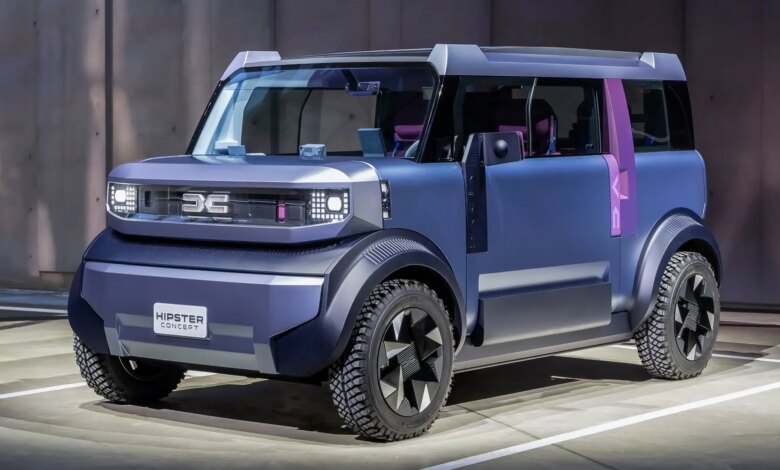
The second major innovation is a compact electric car set to cost around 18,000 euros. It will directly compete in the city car segment and will be assembled at the plant in Slovenia. According to Autobild, this electric model will be based on the Renault Twingo E-Tech, but will get its own distinctive style and features to emphasize its Dacia identity.
Technical specifications remain under wraps for now, but it is reasonable to expect that the powertrain will be similar to the Twingo: around 80 hp, a 27.5 kWh battery, and a range of up to 263 km on a single charge. Such a car will be one of the most affordable in its class, especially considering the current electric vehicle incentive programs in Spain and other European countries.
The compact electric car segment is currently booming. Experts note that demand for these vehicles is growing faster than for any other type of transport. Dacia is betting on simplicity, reliability, and low ownership costs, which may appeal not only to young drivers but also to those looking for a second car for family or business needs.
Trends and competition
The launch of new Dacia models is not the only example of how the European market is responding to current challenges. In China, for example, electric cars have already become absolute sales leaders, and models like the Geely EX2 are changing the game and entering the European market. This is discussed in detail in the article about record electric vehicle sales in China, which analyzes the reasons for their success and possible implications for European manufacturers.
For Dacia, it’s not just about following trends, but staying ahead of them. The company focuses on affordability and practicality—an especially relevant approach as new car prices rise and environmental regulations tighten. With its new models, the brand aims to strengthen its position in Europe and offer buyers an alternative to expensive electric vehicles and crossovers from other brands.
In the coming years, competition in the affordable electric vehicle and family crossover segments is expected to intensify. Thanks to Renault’s support and its ability to quickly adapt to market changes, Dacia is well positioned to maintain its leadership—and even expand its market share.
Dacia is a Romanian car brand that is part of Renault Group. The company is recognized for its affordable and reliable vehicles, which are popular across Europe thanks to their low price and modern technology. In recent years, Dacia has reinforced its presence in the market by offering a wide range of models for different types of buyers. The brand’s latest developments are focused on expanding its lineup and introducing innovations, allowing the company to remain relevant and in demand among European motorists.