The debut of the Toyota Urban Cruiser AWD, featuring two electric motors and an all-wheel drive system, was a notable event in the compact crossover market. The model immediately stood out from its competitors not only due to its technical solutions but also in how it performs both on and off the road. For buyers, it’s not just the numbers in the brochure that matter, but how the vehicle handles real-world challenges—from city traffic jams to rural roads.
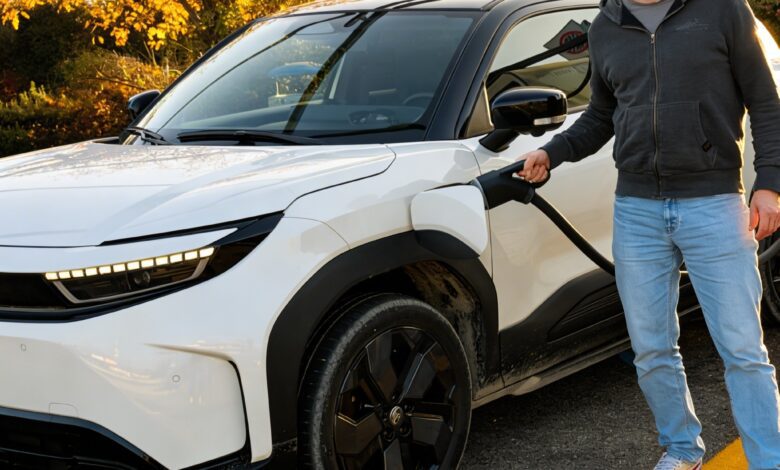
On a chilly morning in Tuscany, with temperatures not rising above eight degrees, the Urban Cruiser AWD instantly showcases its strengths. Its bold front and distinctive LED headlights draw attention in the traffic flow. The elevated seating position offers a commanding view, while the interior blends modern screens with familiar buttons—a feature especially valued by those tired of fully touchscreen panels. The material quality is typical for its segment: plastic dominates, but everything is assembled neatly and practically.
Performance and comfort
The crossover performs confidently on city streets, but its true potential is revealed outside the metropolis. The all-wheel-drive system and 184 hp engine allow it to accelerate to 100 km/h in 7.4 seconds, which is impressive for its size. The electric motor on the rear axle adds extra torque during overtaking and corner exits, making the drive more dynamic. However, the suspension is tuned stiffly, and this becomes particularly noticeable on rough roads—every joint or pothole is felt in the cabin without much cushioning. For those expecting comfort, this may come as an unexpected disappointment.
The steering lacks high feedback, which takes away from the enjoyment of fast driving on winding roads. However, for relaxed travel on smooth roads, these characteristics can largely be forgiven. It’s worth noting that in this segment, crossovers with true all-wheel drive are rare, and the Urban Cruiser AWD stands out compared to competitors, where front-wheel drive or mild hybrid systems are more common.
Off the tarmac
An attempt to leave the asphalt and test the all-wheel drive capabilities on gravel and muddy roads revealed another feature. The electronics quickly distribute torque between the axles, providing ample traction for light off-roading. However, the short suspension travel and its stiffness prevent you from relaxing: on deep potholes and rocks, sharp jolts are clearly felt, which is unpleasant for both the driver and passengers. In such conditions, it becomes clear that the Urban Cruiser AWD is not an off-roader, but rather an urban crossover with enhanced capabilities.
Another important aspect is driving range. The 60 kWh battery is officially rated for up to 395 km, but in reality, especially at low temperatures and in mixed driving, this drops to 230 km. The average energy consumption was 26 kWh per 100 km, which is too much for a compact electric car. For comparison, some competitors from China, as noted in the review of the new BYD hybrid SUV with record-breaking range, demonstrate much more modest consumption.
Charging and practicality
Charging time is another factor that cannot be ignored. The maximum fast charging power is limited to 67 kW, and it takes at least 45 minutes to recharge from 10 to 80 percent. For those who often take long trips, this can be a drawback, as competitors offer faster solutions. The reason lies in the choice of LFP batteries: they are cheaper and more durable, but lag behind in energy density and charging speed.
Inside, the Urban Cruiser AWD impresses with its well-organized interior space. The 310-liter trunk is standard for its class, but the rear seats can slide forward or backward by 16 cm, allowing you to either increase legroom or free up additional luggage space. The backrests fold in a 40:20:40 split, and the recline angle is adjustable, which is convenient for family trips and transporting large items. Such a flexible approach to cabin transformation is rarely found among competitors.
Details and impressions
Overall, the Toyota Urban Cruiser AWD leaves the impression of a confident and modern crossover that stands out with its design and technical solutions. Its power and all-wheel drive make it an appealing choice for those seeking more than just a typical city EV. However, the stiff suspension, high energy consumption, and less-than-ideal charging speed might deter some buyers, especially when compared to new market offerings.
Competition in the compact SUV segment is intensifying, and every new player has to strike a balance between performance, comfort, and practicality. The Urban Cruiser AWD demonstrates that Japanese manufacturers are ready to experiment, but not every solution is flawless. As Autobild notes, the model makes a mixed impression: on one hand, there’s confidence and versatility; on the other, compromises that are hard to ignore.
Toyota is one of the world’s largest automakers, renowned for its innovation and reliability. The company is actively developing electric and hybrid technologies, aiming to offer customers a wide range of models for various needs. The Urban Cruiser AWD, a result of collaboration with Suzuki, embodies the latest market trends while maintaining the brand’s distinctive style. In recent years, Toyota has focused particularly on adapting its vehicles for European conditions, which is evident in its new models and their features.