In recent weeks, Madrid’s gastronomic scene has noticeably evolved, with new venues quickly becoming hotspots for locals and visitors alike. For Spaniards, it’s more than just a chance to try something new—it’s an opportunity to experience familiar outings and gatherings from a fresh perspective. As El Pais notes, demand is growing for affordable and original formats, and new places almost instantly spark queues and lively discussions on social networks.
As prices for entertainment and dining continue to rise, the emergence of budget-friendly spots with bold concepts has become a significant event for the city’s rhythm. These establishments not only offer a new take on familiar dishes but also shape new routes for leisure in central Madrid. This article highlights three examples that have already become part of the city’s latest trends.
Homemade desserts with a story
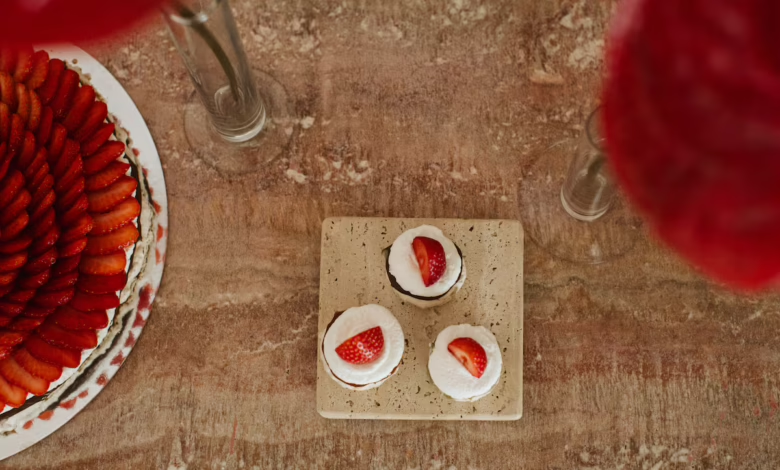
Brela (calle Lagasca, 130) is more than just another pastry shop—it’s a family project with roots in Croatia. The focus here is on traditional baked goods adapted for modern tastes. The star attraction is the pavlova cake: a delicate meringue base, cream, fresh fruit, nuts, and caramel. This gluten-free recipe comes in several variations, including chocolate-nut and pistachio. The interior feels like a cozy living room, with every detail thoughtfully designed to create a relaxing atmosphere for unhurried tea time. According to El Pais, the owners of Brela left behind office life to open a place where everyone can feel at home. Their idea proved popular: locals in the Salamanca district quickly embraced the new concept, and it’s not uncommon to see lines for dessert even on weekdays.
In recent years, Madrid has seen a surge of interest in family-run and local pastry shops that focus on quality and the story behind the product. Brela has become a prime example of how personal history and attention to detail can turn a small establishment into a city landmark.
Next-generation sandwiches
Grab (Travesía de San Mateo, 16) was created in response to city dwellers’ demand: Madrid lacked places where sandwiches could offer not just a quick bite, but a full-fledged gastronomic experience. The founders of Grab drew inspiration from New York and Paris, but adapted the concept for the local public. Here, the focus is on bold flavors and unusual combinations: a sandwich with cheese and caramelized onions, chicken with kimchi, and an option with pulled oxtail and a rich sauce. The average bill is about 20 euros with a drink, making Grab accessible to a wide audience.
The venue is styled in a 1970s aesthetic, and the space is designed primarily for takeaway orders. The owners recommend picnicking on Plaza de Santa Bárbara or taking sandwiches for a walk around the Justicia neighborhood. Demand exceeded expectations in the first weeks: some items disappeared from the display by lunchtime, and queues quickly became a common sight. This success is due not only to the quality but also to the welcoming atmosphere that encourages guests to linger.
Donuts as a show
The opening of Krispy Kreme (calle Princesa, 7) in Madrid drew significant attention: even before the official launch, hundreds of fans gathered at the doors. On opening day, the line grew to over 500 people, with many arriving before dawn. A main highlight is the chance to watch donuts being made through a glass wall, turning the purchase into a real show. When the red ‘Hot now’ neon lights up, it signals that fresh, hot donuts have just come out of the oven and are ready for tasting. The average bill is around 10 euros, and the atmosphere evokes American traditions adapted to the Spanish lifestyle.
In recent years, Madrid has become a stage for culinary experiments, where classic formats are reimagined. Krispy Kreme quickly found its place among those with a sweet tooth, and the ‘kitchen show’ format is especially popular with young people and families. According to russpain.com, such openings are shaping urban consumption habits and influencing new lifestyles.
City habits and new routes
The emergence of venues like Brela, Grab, and Krispy Kreme reflects a broader trend: Madrid residents are increasingly choosing spots where they can not only grab a bite but also enjoy new experiences. This goes beyond gastronomy — the city as a whole is becoming more receptive to experiments and new forms of leisure. For example, the capital recently discussed an unusual case when a man on Princesa street took a risky step to access his balcony — details of this incident sparked a lively reaction online. Such stories become part of city life and highlight how quickly the pace of the capital is changing.
In recent years, Madrid has seen a wave of new cafés, pastry shops, and gourmet stores opening up, rapidly gaining popularity thanks to creative concepts and affordable prices. In 2025, for instance, several small bakeries and coffee shops in the Chamberí and Malasaña neighborhoods caught residents’ attention with their signature desserts and unique drinks. These kinds of places often become popular hangouts for young people and families, with lines at the entrance now a common sight. The city keeps evolving, and new culinary formats are becoming a regular part of daily life for Madrid’s residents.