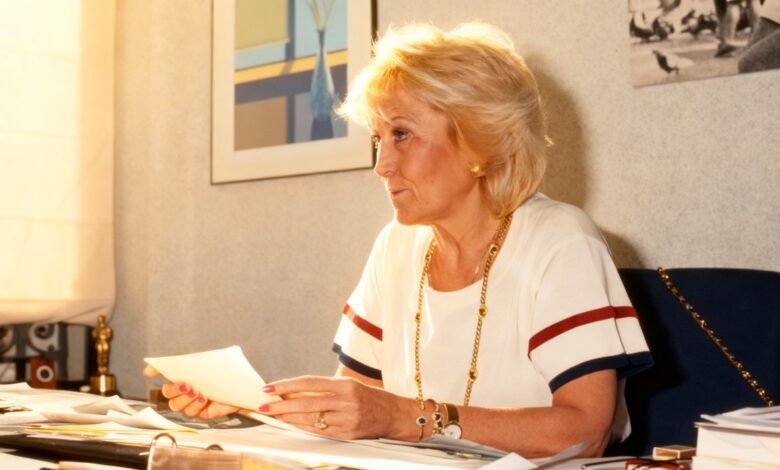
Encarna Sánchez’s influence on Spain’s radio industry is still felt today, even though three decades have passed since her death. Her biography is more than just a success story—it’s an example of how personal tragedies and social upheavals can shape character and destiny. Looking back on her life, it becomes clear that behind the famous name was a complex and ambiguous personality, whose journey was filled with challenges and unexpected turns.
Unprotected childhood
Encarna Sánchez was born in 1935 in Carboneras, at one of the most turbulent times in Spain’s history. Her father, a supporter of the Republicans, was executed in 1939, before she even turned four. For the family, this tragedy was not only a personal loss but also a social stigma: the widow and her five children found themselves impoverished and isolated. In postwar Almería, the Sánchez-Jiménez family’s life became a daily struggle for survival, where even simple joys were a luxury.
Constant scarcity and fear meant Encarna encountered the harshness of the world early. Silence and unspoken truths became the norm at home, where questions about her father’s past went unanswered. According to elcierredigital.com, it was during this period that the future radio star developed resilience and learned to hide her feelings—a trait that would later become her trademark.
Orphanhood trials
At the age of seven, Encarna ended up in the El Canario orphanage, where the conditions were far from safe. Hunger, humiliation, and strict discipline became part of her daily reality. It was here she first encountered systemic abuse and learned to survive under constant pressure. Music and books became her only escape from reality. However, when her mother discovered what was happening, she immediately brought her daughter home despite all the difficulties.
This experience left a deep mark: Encarna became reserved but strong inside. She learned early that she could rely only on herself, and began to seek ways to become independent. In a home where there was little food or warmth, she dreamed of a different life where her voice would be heard.
First steps toward success
As a teenager, Encarna showed remarkable determination. She took part in music competitions, performed on stage, and quickly gained respect among her peers. It was then that her stage name ‘Encarnita de Almería’ appeared, under which she began to build her career. Radio became a true discovery for her: a chance stand-in for a sick host at Radio Almería turned into a pivotal moment. Despite an unsuccessful debut, Encarna felt she had found her calling.
For two years, she worked without pay, mastering every aspect of the profession. Her perseverance and eagerness to learn set her apart from others. Soon, she was entrusted with her own show, “La tarde es joven,” marking her first major success. According to russpain.com, this experience helped her develop a unique way of engaging with the audience—a style that would later earn her nationwide recognition.
Move to Madrid
Realizing that opportunities in Almería were limited, Encarna made the decision to move to the capital. It was not an easy choice, but her drive to break free from poverty and fulfill her potential outweighed the fear of change. Madrid brought new challenges, but also new horizons. Here, she truly established herself as a professional able to compete in the male-dominated world of radio broadcasting.
The story of Encarna Sánchez is not just about personal struggle—it also reflects an entire era. Her journey from orphan to one of the most influential figures in Spanish media shows how inner resolve and a willingness to defy circumstances can change not only one’s own life, but also society’s perception of women’s roles in the media.
Encarna Sánchez became a symbol of resilience and independence for generations of Spaniards. Her name is linked to strength of character and the determination to persevere even in the most difficult situations. Looking back on her story, it’s impossible not to draw parallels with other remarkable women who, despite societal pressure and personal hardships, gained recognition and shaped the course of history. Similar examples have appeared in recent years, as Spanish journalists and presenters, facing discrimination and bias, have continued to fight for their place in the profession, inspired by the legacy of figures like Encarna Sánchez.