Far from the bustling tourist routes, nestled in the heart of one of Salamanca province’s picturesque mountain ranges, lies a village that can transport travelers centuries into the past. While neighboring towns, such as the famous La Alberca, have long since become magnets for mass tourism, this corner has preserved its pristine charm and tranquility. Here, among ancient chestnut forests and crystal-clear rivers, time seems to slow down, offering visitors a unique chance to experience an untouched past.
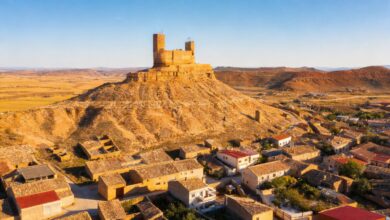
The architectural character of this place is its greatest pride. It was no coincidence that as early as 1982, it was designated a Historic-Artistic Site. A walk along its cobblestone streets turns into a real exploration. Half-timbered buildings with wooden frames, symbols meticulously carved in stone on façades, balconies overflowing with flowers—every detail here tells of a rich past. The main square, the church dedicated to Saint Martin of Tours, and the 15th-century castle rising above the town together form the heart of this historical ensemble, which has managed to withstand the relentless passage of time.
The medieval fortress is experiencing a revival. After meticulous restoration, it now houses the Interpretation Center of the Sierra de Béjar y Francia Biosphere Reserve, making it not just an architectural monument but also an important cultural and educational landmark. From the top of the tower, visitors can enjoy breathtaking panoramic views of the surrounding mountains and tiled rooftops. At the base of the castle lies another local attraction—a bullfighting arena. Documentary evidence dates it back to the 17th century, making it one of the oldest in all of Spain.
The parish church, built between the 13th and 15th centuries, is an astonishing blend of styles. Its architecture harmoniously weaves together Gothic, Mudéjar, and Baroque elements. This diversity of styles vividly reflects the region’s rich cultural heritage and complex history. The church serves not only as a spiritual center but also as a living guide to the history of architecture.
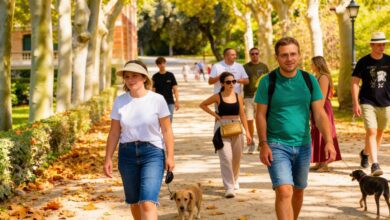
The town’s surroundings are just as appealing as its center. An old bridge and remnants of an ancient Roman road lead to secluded chapels and recreation areas. In the summer months, the Candereülo stream forms a natural pool, offering a refreshing escape on hot days. Outdoor enthusiasts can enjoy the circular “Forest of Mirrors” route, which connects several nearby villages. This trail is unique in that contemporary art installations blend harmoniously into the natural landscape. Remnants of Visigothic fortifications and Roman structures found nearby confirm that this area is not just a picturesque spot, but a living testament to the centuries-long evolution of Spanish land.