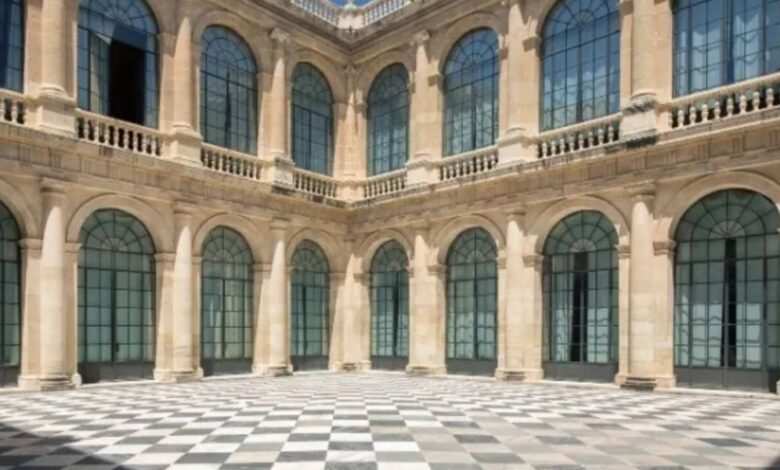
In the very heart of the historic center of the Andalusian capital, surrounded by world-renowned landmarks such as the Cathedral and the Royal Alcázar, stands a majestic building. Its austere yet harmonious facades preserve the memory of the era when Spain was the center of the world and its ships sailed uncharted oceans. This is more than just a structure—it is a portal to the past, inviting visitors to experience the history of great voyages, conquests, and discoveries that forever changed the map of the planet. And most remarkably, this journey through time is open to all, as admission is free.
Originally, this monumental complex was conceived at the end of the 16th century by order of King Philip II for an entirely different purpose. It was intended to become the Casa de Contratación—a guildhouse for merchants, a place where trade thrived and deals were struck regarding the influx of goods from the New World. The project was entrusted to Juan de Herrera, a key figure of the Spanish Renaissance, who also designed the renowned El Escorial. He was assisted by distinguished craftsmen such as Alonso de Vandelvira and Juan de Minjares. The building is a flawless example of the Herrerian style: strict geometric symmetry with a square layout, a spacious inner courtyard, two floors with vaulted ceilings, and an impressive marble grand staircase linking them. Altogether, this creates an atmosphere of restrained grandeur and impeccable proportions.
The fate of the building changed dramatically in the 18th century. King Carlos III decided to transform the former exchange into a centralized repository for all documents related to the American and Asian colonies, which until then had been scattered across different cities of the kingdom. Since 1785, this site has safeguarded documentary heritage of immense historical value. Imagine: more than 43,000 folders containing about 80 million pages of text and nearly 8,000 original maps and plans. If all these papers were laid out in a single line, it would stretch for more than nine kilometers. Among these documents are relics such as the Treaty of Tordesillas, included in UNESCO’s Memory of the World Register, the will of Juan Sebastián Elcano, and papers of the family of Christopher Columbus himself, whose misconception gave the American lands the name “Indias.” Unsurprisingly, this complex, together with the neighboring Alcázar and Cathedral, was recognized as a World Heritage Site.
Today, it is one of the world’s most important documentary centers and a must-visit for anyone seeking to gain a deeper understanding of the complex and multifaceted relationship between Spain and the Americas. Its halls not only showcase part of this vast collection of manuscripts, but also host temporary exhibitions. These exhibitions feature unique documents that have shaped the course of world history. Conveniently located within Seville’s main tourist triangle and offering free admission, it is an essential stop for any traveler exploring the Andalusian capital. Here, Renaissance architecture meets the living memory of one of the most fascinating chapters of Spain’s past.