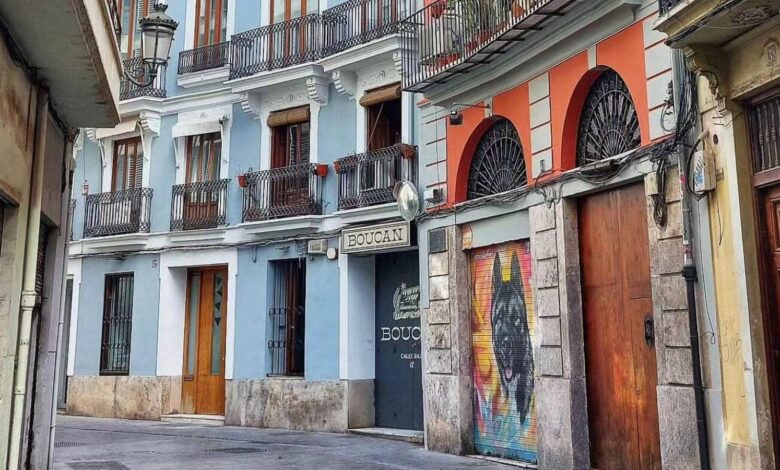
In the historic center of Valencia, where every stone holds the memory of bygone eras, there is a street that can surprise even those who consider themselves city connoisseurs. Its story is not just a series of changing names, but a reflection of entire chapters of urban life, where crafts, trade, and culture are woven into a single tapestry. Here, the spirit of old Carmen is still palpable, and remnants of the past unexpectedly emerge in the most ordinary courtyards and facades.
Today, this street is known as Carrer de Baix, but over the centuries it has changed its name and purpose more than once. In the 15th century, it was known as the street of weavers; later, blacksmiths set up their workshops here, and by the 19th century, its name had simplified to the familiar ‘Baix.’ Each new era brought its own traditions, leaving traces in the architecture and atmosphere. Walking along it, you cannot help but notice how past and present collide at every step.
Changing eras
At different times, Carrer de Baix became a gathering place for people from all walks of life. In the early 19th century, the famous Mesón de la Piedra operated here, attracting locals and travelers alike. In another building, at number eight, there were barracks—the only military facility in this neighborhood, which gave the street a special status. Aristocratic families, such as Gauna, chose these quarters as their homes, and the palace of Francisco Martínez de la Raga still stands as a reminder of former luxury, now serving as a nursing home.
Not only architecture, but the residents themselves shaped the unique character of the street. Artists were born here, studios opened, and every courtyard was filled with life. Many recall that places like these create the true spirit of Valencia, where history is not just preserved but lives and evolves.
Trade and Craftsmanship
By the end of the 19th century, the street had become a true center of artisanal production. The opening of the La Industrial Valenciana factory marked a new era: for the first time in the city, a steam machine for manufacturing fans was put into operation here. Soon, jewelry workshops appeared, where Fernando Téllez created pieces bearing the Rat Penat hallmark, and shops like Casa Pinazo and Casa Insa became attractions for lovers of festivities and costumes.
A special place in residents’ memories belongs to the cobbler Ricardo Barceló, whose shoes were worn by players from the city’s top football clubs. And the Carxofa bar, famous for its fried artichokes, became a true legend for anyone who ever visited this area. Each such establishment is more than just a business—it’s part of the city’s mythology, where an entire era is hidden behind the counter.
Cultural Heritage
The street was not only a place of trade and labor, but also of inspiration. At number 40, a commemorative plaque honors the artist Josep Renau, whose work became a symbol of Valencia’s cultural renaissance. Here, among the old facades, you can also find traces of other notable figures whose lives are closely linked to this place.
Interestingly, similar stories can be found in other parts of Spain. For example, Toledo has seen a real struggle to preserve a unique craft that has become an integral part of the city’s identity. Learn more about how ancient traditions can transform an entire region in the article on the artisanal heritage of Castilla-La Mancha.
Today, Carrer de Baix remains a place where past and present meet. Here you can not only see old houses and workshops, but also sense how traditions live on in every gesture, in every glance of a passerby. This street is more than just a part of the city – it is its living memory, open to those willing to stop and look more closely.
Josep Renau, whose name adorns one of the walls of Carrer de Baix, was not only an outstanding artist but also an active participant in Valencia’s cultural life. His work was distinguished by its boldness and innovation, and his impact on the city’s development can still be felt today. Renau became a symbol of a generation for whom art was inseparable from social change. His legacy continues to inspire new residents and visitors alike, reminding us that even the most modest streets can become a stage for great achievements.