Days before the tragedy on the Madrid–Andalusia high-speed line, train drivers received a warning: a serious rail defect had been detected near a switch. Adif (Administrador de Infraestructuras Ferroviarias) imposed a speed limit of 30 km/h on that section, but the area where the crash took place was not covered by these restrictions. The collision of two trains in Adamuz claimed 42 lives, with 43 people still missing. The state of Spain’s railway infrastructure is once again under scrutiny.
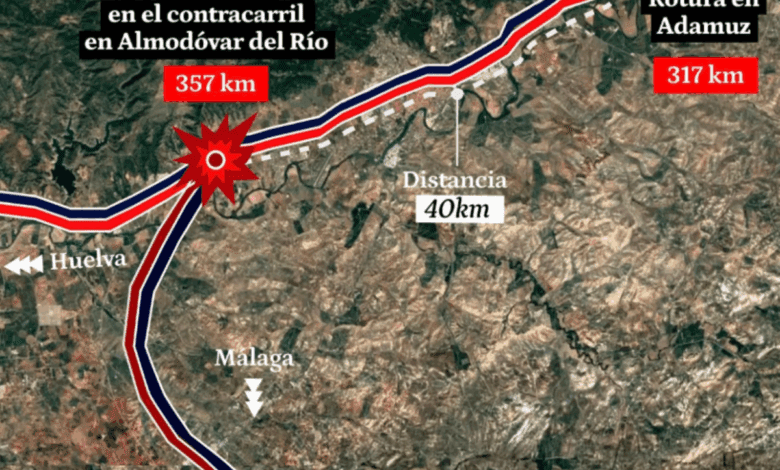
Train drivers have repeatedly raised concerns about worn-out tracks and insufficient maintenance funding. Their fears, as it turned out, were not unfounded. Internal reports regularly issued by Adif document numerous speed restrictions due to technical problems, many of which remain unresolved for months or even years. This time, the warning pertained to a segment near Almodóvar del Río, about 40 kilometers from the disaster site. But it was in Adamuz, with no restrictions in place, where the fatal failure occurred.
Warning signs
On the day of the accident, January 19, an official alert was in effect on line 010 connecting Madrid and Andalucía regarding a ‘broken check rail’ at switch 726, which leads toward Málaga. This safety feature is designed to prevent trains from derailing when the switch is moved. However, despite the identified malfunction, the speed restriction applied only to a specific section rather than the entire line. In the Adamuz area, trains continued to operate at normal speeds—up to 220 km/h.
Experts point out that a similar malfunction elsewhere could have caused the disaster. The train driver notification system, in essence, did not cover the full range of possible risks. Internal Adif documents provided to drivers from Renfe, Iryo, and other operators include a list of all current restrictions and faults. However, even regular warnings offer no guarantee of safety if issues are not resolved promptly.
Train drivers speak out
Drivers’ unions have repeatedly raised concerns about chronic underfunding and aging infrastructure. Some defects, they say, remain unaddressed for over a year. Adif’s internal reports are split into two types: for conventional and for high-speed lines. Drivers are able to monitor all restrictions and incidents, but this does not solve the problem if repairs are not made.
The situation worsened after the high-speed transport market was liberalized. The arrival of new operators such as Iryo was not accompanied by increased investment in track maintenance. As a result, train drivers say that on some sections, trains literally “bounce” on the rails, and last year they even demanded that the maximum speed be reduced to 250 km/h due to dangerous vibrations that could cause luggage to fall and injure passengers.
Chronicle of a Disaster
At the moment of the collision, the Iryo train driver did not immediately grasp the scale of the incident. Black box audio recordings reveal that at first he reported a “contact” and only after stopping realized that a derailment had occurred. In urgent communications with the dispatcher, he requested the power be cut, reported that the train was blocked, and asked for emergency services to be dispatched. “I have a fire, there are injured, I’m leaving the cab,” he said calmly but restrained at the end of the call.
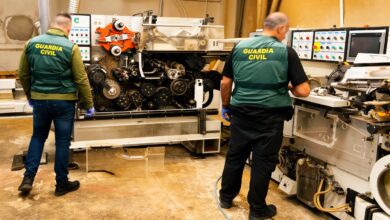
While rescuers worked their way to the carriages that had slid off the embankment, the investigation was only just beginning. The railway accident investigation commission and the Guardia Civil continue to analyze the causes of the tragedy. But it is already clear: the alert and restriction system failed to prevent the disaster.
New Incidents
Less than two days after the Ademus accident on the R4 Rodalíes line, another train derailment occurred. This time, one person was killed and more than twenty were injured. That same day, Adif was forced to temporarily reduce the speed on the Madrid–Barcelona route to 160 km/h after drivers complained about bumps on the tracks.
Rail safety in Spain is raising growing concerns. Despite regular reports and official measures, the real issues remain unresolved. Train drivers insist that without major investment and a comprehensive approach to repairs, tragedies will happen again. As long as the infrastructure remains in this state, every new journey is a gamble.