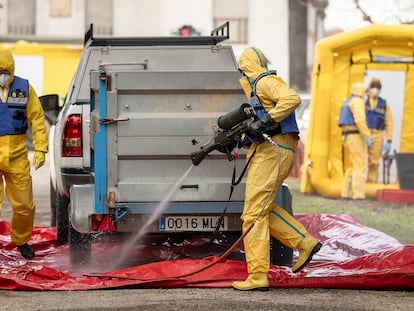
The spread of African Swine Fever (ASF) in Barcelona has become an alarming signal for residents and businesses in the region. New cases of infection among wild boars have forced Catalonia’s authorities to urgently expand the restricted zone to prevent catastrophic consequences for local farmers and the entire meat industry. Now, 14 municipalities are under special surveillance, including areas previously considered safe.
The outbreak of the infection outside the original surveillance radius has shown that the situation is developing unpredictably. Last week, two dead wild boars with confirmed diagnoses were discovered in Molins de Rei, marking the first warning sign for experts. One of the new cases was identified in Sant Feliu, also outside the previous risk area. As a result, not only Molins de Rei and El Papiol have been added to the list of restricted territories, but also certain districts of Barcelona: les Planes, Vallvidrera, and Tibidabo.
Strengthening the measures
The decision to expand the restricted zone was made after analyzing data collected in January. At that time, experts noticed that infected animals were already appearing along major transport routes, such as the C58 in Terrassa Norte and the C16 in Rubí. This confirmed fears that the virus is capable of quickly spreading significant distances and moving beyond the initial six-kilometer radius.
The Catalan authorities did not wait for new outbreaks and immediately added additional municipalities to the list of restricted areas. Now, even regions where no cases had previously been recorded are under control. This decision aims to slow the spread of the infection and protect pig farms at risk of suffering enormous losses.
Risks to the industry
African swine fever is not dangerous to humans, but it is deadly for pigs. An outbreak can wipe out an entire farm’s livestock in just a few days. For Spain, where the meat industry holds an important place in the economy, such epidemics present a serious challenge. The last time the country faced this virus was in 1994, and there have been no cases since then.
Authorities have now tightened regulations for everyone working with animals and meat products. Additional inspections have been introduced, animal movement is restricted, and in some areas, temporary bans on hunting and entering forests are in place. Farmers and business owners are closely following the developments, fearing further losses.
Impact on daily life
The expanded restriction zone has affected not only agriculture but also ordinary residents. In some areas of Barcelona and its suburbs, special rules now apply to waste disposal, forest access, and even recreation. Authorities urge everyone to follow precautions to prevent further spread of the virus.
The situation is reminiscent of other recent incidents where unexpected events in the region have led to serious consequences for city residents. For example, the recent sudden suspension of Rodalies train services also caused concern among residents and showed how quickly everyday life can change.
While experts continue to investigate the origins of the virus and authorities adjust their measures, residents and businesses are having to adapt to new realities. In the coming weeks, the situation could shift if new hotspots emerge or the outbreak is brought under control.
African swine fever is a viral disease affecting domestic and wild pigs. In recent years, outbreaks of this disease in Europe have led to mass culling of animals and significant economic losses. In 2025, similar incidents were reported in several regions of Eastern Europe, prompting a wave of tighter sanitary measures across the continent. In Spain, the virus had not been detected for over three decades until this year, making the situation in Barcelona particularly concerning for experts and farmers.