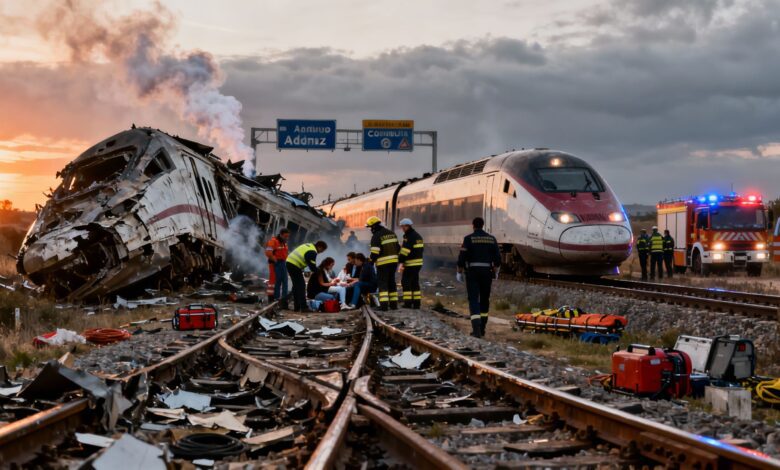
In June 2025, the Spanish government officially confirmed two technical failures on the high-speed rail line between Adamuz and Villanueva de Córdoba. These incidents occurred at the same section where, in January 2026, a train collision claimed the lives of 39 people. Despite officials’ assurances regarding safety, concerns about the state of the infrastructure continue to grow.
Both malfunctions recorded last summer involved signaling systems. The first incident occurred on the El Valle viaduct, where a metal plate installed on a device for compensating thermal expansion came into contact with the rail due to heat and vibration. The safety system was triggered automatically, blocking the section and halting train movement. The second failure was caused by a breakdown of a relay card—a key component of the signaling system. Both issues were addressed during scheduled maintenance, and according to authorities, neither posed any threat to passenger safety.
Questions remain unanswered
Nevertheless, this section of the railway was once again in the spotlight following the tragedy of January 2026. The causes of the collision between two trains have yet to be identified, and the public is demanding answers. Details that have emerged about previous technical issues are raising doubts about the reliability of the entire system. Authorities insist that all maintenance and repair work was carried out on time and that the infrastructure meets required standards. But the facts speak for themselves: malfunctions did occur, and it was here that one of the worst accidents of recent years took place.
In response to an inquiry from opposition senators, the government detailed exactly how these faults were addressed. In particular, in June 2025, inspections, preventive and emergency repairs, as well as vegetation clearing and control along the tracks, were conducted at Villanueva de Córdoba station and other sections of the southern line. In October of the same year, a separate contract was signed to upgrade the fire protection system.
Systemic issues
However, despite all these measures, new failures were recorded on the line during 2024 and 2025. According to the railway company, four more incidents occurred during this period, affecting both signaling systems and infrastructure. One of these, which happened in December, disabled a track switch. Each of these malfunctions led to delays and temporary movement restrictions, further undermining passenger confidence.
Authorities continue to insist that safety has always been a priority and that all incidents have been resolved as quickly as possible. Nevertheless, recurring failures and the tragic train accident near Córdoba raise important questions: is the system really functioning as it should? Or do official reports conceal deeper, unresolved issues?
Oversight and accountability
In recent months, scrutiny of Spain’s rail infrastructure has only intensified. After the January 2026 disaster, the public is demanding not only a thorough investigation into the causes of the crash but also a comprehensive review of the entire track maintenance and oversight system. Pressure is mounting on contractors responsible for the technical condition of the lines. Many experts believe that without transparency and genuine reform, new tragedies are inevitable.
For now, all that remains is to watch how the situation unfolds. Officials continue to release reports on the work carried out, but public confidence in these documents has been seriously undermined. The Spanish railway stands at a crossroads, and the way authorities address these challenges will determine the safety of millions of passengers.