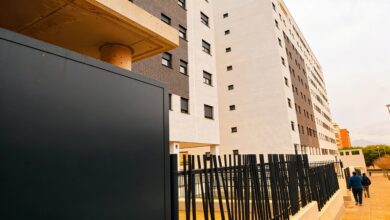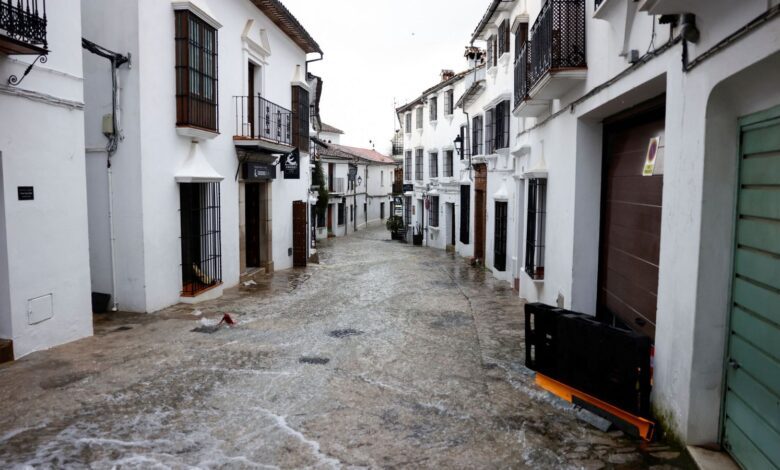
In Grazalema (Grazalema, Cádiz), life is gradually returning to normal after a week filled with anxiety and uncertainty. For thousands of Spaniards, this news brings long-awaited relief: Andalusian authorities have given the green light for 80% of residents to return home in stages. The decision comes after a thorough inspection of the ground by experts, who sought to rule out any new risks of collapse. The mass evacuation was a necessary response to the danger of sinkholes caused by extreme rainfall, which within a matter of hours turned the town into a high-risk zone.
The situation in Grazalema has become one of the most talked-about topics in the region. When dangerous voids were discovered under residential areas in early February, authorities ordered the immediate evacuation of residents. In just a few hours, over a thousand families left their homes, many finding temporary shelter with relatives, while around 500 people were accommodated in Ronda (Ronda), where meals and overnight stays were arranged. Hundreds of meals were prepared daily for evacuees at the local sports complex, and children temporarily attended schools in neighboring towns.
Safety inspection
A key stage in the return was the work of scientists and geologists, who used modern technology to study the underground cavities beneath the city. Special attention was paid to the area where ground collapses had previously occurred. After analyzing the data, experts concluded that most of the territory is safe for living; however, 277 homes remain off-limits due to ongoing risk. Authorities promised that families whose homes are still inaccessible will be able to stay temporarily with neighbors or in specially prepared facilities.
The restoration of normal life in Grazalema is proceeding in stages. As early as Monday, the process of residents returning home began, under the supervision of civil protection services. Particular care is being taken for children’s safety: the local school has been deemed suitable for classes, and lessons will resume in the coming days. Authorities emphasize that the situation is under constant monitoring, and additional measures will be taken at the slightest sign of danger.
Aftermath of the disaster
Extreme weather conditions that hit Andalusia have caused not only the evacuation in Grazalema but also a number of other emergencies across the region. In just a few hours, the city saw more than 600 liters of rainfall per square meter, leading to overflowing underground galleries and a sharp increase in the risk of collapses. Such events have repeatedly triggered mass evacuations and disruptions to local infrastructure. Reflecting on recent incidents, it’s worth mentioning that storm Leonardo also prompted mass evacuations and road closures in Andalusia, further highlighting the region’s vulnerability to natural disasters.
Regional authorities are emphasizing the need for continuous monitoring of soil conditions and infrastructure to minimize the impact of similar incidents in the future. In Grazalema, efforts have already begun to reinforce the most vulnerable areas and to develop new emergency response protocols. Residents who experienced the forced evacuation stress the importance of swift, coordinated efforts by emergency services and hope that such incidents will not be repeated.
Context and background
In recent years, Andalusia has increasingly faced extreme weather events, leading to mass evacuations and destruction. Surges of rain and storms, like those that recently hit Grazalema, have repeatedly forced temporary relocations of residents and school closures. In 2024, a similar situation occurred in Malaga, where a landslide halted high-speed train traffic and prompted the evacuation of several towns. Other regions of the country have also reported cases where heavy rains and the threat of landslides led authorities to temporarily relocate residents. These events highlight the importance of timely response and ongoing monitoring of infrastructure in high-risk areas.