Hybrid cars have confidently overtaken diesel and petrol models in popularity in Spain. Buyers are increasingly favoring eco-friendliness, savings, and advanced technology over traditional engines. Two brands are now in the spotlight — BYD and Toyota. One of them has only recently entered the market, while the other has long been synonymous with hybrid technology. But which one truly offers the best solutions for Spanish roads
In recent years, demand for electrified vehicles in the country has soared, with alternative energy sources now accounting for more than two-thirds of the market. Hybrids — both standard and plug-in — have become especially popular. In this segment, BYD and Toyota are fiercely competing for buyers’ attention, each betting on different hybrid system types.
BYD Hybrids
The Chinese company BYD is rapidly gaining ground in Europe, and Spain is no exception. The manufacturer focuses on plug-in hybrids (PHEVs) that allow for substantial distances to be covered on electric power alone. This is especially appealing to those looking to switch to electric vehicles but who aren’t yet ready to completely give up internal combustion engines.
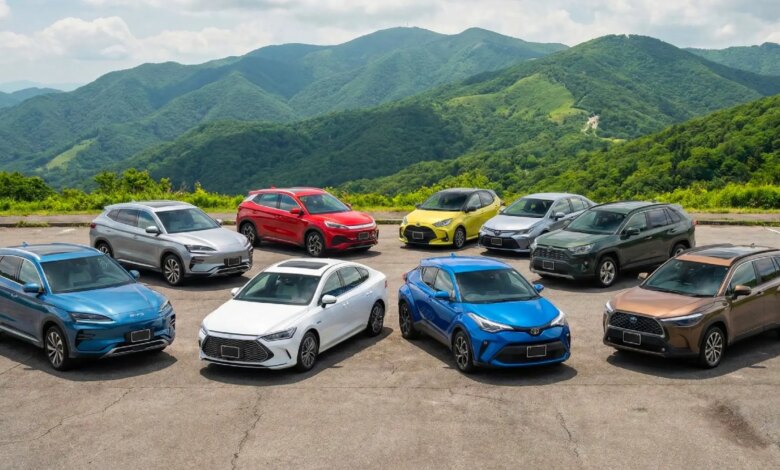
BYD offers three models with different specifications. The Atto 2 DM-i is a compact option with two versions: 166 hp and a 7.8 kWh battery (up to 40 km on electric power) or 212 hp and an 18 kWh battery (up to 90 km without fuel). The Seal U DM-i is a larger SUV available in three versions: 218 hp and 18.3 kWh (80 km), 218 hp and 26.6 kWh (125 km), and a 324 hp all-wheel-drive version with 18.3 kWh (70 km). The newest in the lineup is the Seal 6 DM-i, available as both a sedan and a station wagon, with 184 and 212 hp engines and a range of 55 and 105 km respectively.
All BYD hybrids are equipped with Blade lithium iron phosphate batteries, renowned for their durability and safety. Additionally, the vehicles support V2L technology, allowing you to power external devices—a feature that can be useful in unexpected situations.
Toyota hybrids
The Japanese giant Toyota has long been associated with hybrid technologies. Over the past two decades, the company has launched dozens of models, and today its range in Spain is impressively diverse. Unlike BYD, Toyota focuses on classic hybrids (HEVs), although its lineup does include several plug-in versions.
The range starts with the compact Aygo X, now equipped with a 116 hp hybrid system. Next up is the Yaris, one of the most popular city cars. The Corolla, projected to lead 2025 sales, is available with 140 and 196 hp engines and in three body styles. The SUV Corolla Cross offers the same powertrains as the hatchback but in a more spacious package.
In the crossover segment, the C-HR stands out, available either with a standard hybrid powertrain (140 or 197 hp) or as a plug-in version with 223 hp and a range of 66 km. The flagship RAV4 is offered in both hybrid and PHEV variants: 218–222 hp for the conventional hybrid and 309 hp with up to 75 km of electric range for the plug-in version. The Land Cruiser has yet to receive a full-fledged hybrid system but comes equipped with a diesel engine featuring mild hybrid technology.
Technologies and Approaches
The main difference between the two brands lies in their hybridization philosophy. Toyota relies on time-tested solutions, prioritizing reliability and ease of use. Their hybrids do not require plug-in charging; fuel efficiency is achieved by combining two motors and using energy recuperation during braking.
BYD, on the other hand, targets those seeking to maximize electric driving without fully giving up gasoline. Plug-in hybrids allow almost emission-free city driving, while alleviating concerns about charging stations on longer journeys. Additionally, Chinese cars are often more competitively priced, which becomes a decisive factor for many buyers.
Market and Outlook
In 2026, hybrid vehicles will continue to strengthen their position in Spain. The share of diesel cars has dropped to a minimum, and electrification has become an integral part of the national fleet. More and more buyers are choosing between Toyota and BYD hybrids, guided by their needs and lifestyle.
Japanese models attract those who value reliability and simplicity, as well as drivers who don’t want to rely on charging outlets. Chinese models appeal to those seeking cutting-edge technology, longer range, and greater fuel savings. Both brands, however, continue to refine their products, offering increasingly innovative solutions for Spanish roads.
BYD (Build Your Dreams) is China’s largest manufacturer of electric and hybrid vehicles and is rapidly expanding its presence across Europe. The company is known for its innovative Blade batteries and aggressive pricing. Toyota, the Japanese automotive giant, was the first to roll out hybrid technologies on a mass scale, selling millions of such vehicles worldwide over the past two decades. In Spain, both brands rank among the top sellers of electrified vehicles.