Among the treasures of French jewelry history, the diamond bow brooch that once belonged to Empress Eugénie de Montijo stands apart. This is not just an ornament, but a 19th-century masterpiece, remarkable for its flexibility and dazzling play of light. Recently, the Louvre, determined to reclaim a piece of national heritage, spared no expense and paid nearly eleven million euros for it at a Christie’s auction. Until then, the relic had spent decades gathering dust in a private collection, hidden from public view.
The creator of this marvel was the empress’s personal jeweler, Parisian master François Kramer. He used old-cut European diamonds to craft a complex design. The brooch is shaped like a bow with two braided ribbons, from which hang two tassels and five movable cascades. The entire masterpiece features 2,438 white and 196 pink diamonds, set on a base of silver and gold. Made around 1855, the brooch had a removable pin and was stored in a red leather case proudly inscribed with “Diamonds of the French Crown.”
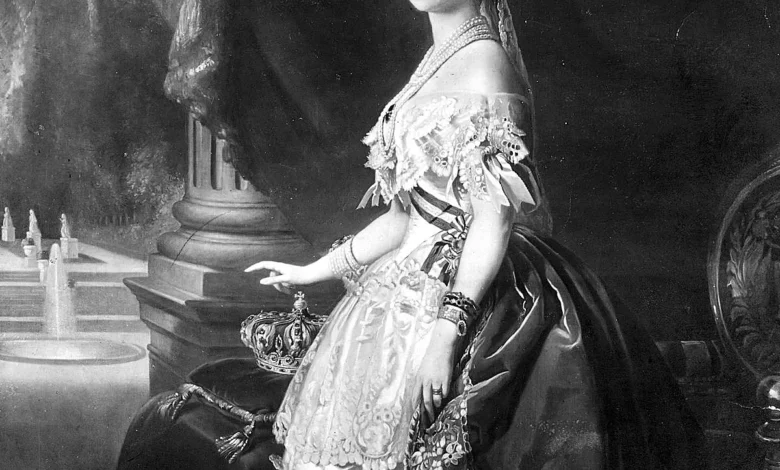
Originally, this jewel was part of a lavish belt featuring over four thousand stones from the French crown treasury. Eugenia de Montijo, Spanish by birth and Empress of France after marrying Napoleon III in 1853, was renowned for her avant-garde taste and passion for diamonds. She often redesigned her jewelry to keep up with the latest fashions. The same happened with this belt, which was created for the 1855 World Exhibition. Later, the Empress dazzled at a ball in Versailles wearing it, during Queen Victoria of Britain’s visit.
In 1864, Eugenia ordered the belt to be dismantled, but with one special condition: the exquisite bow was to be preserved and transformed into a separate brooch. After the fall of the empire in 1870, the Empress fled to England, but the crown jewels, including this brooch, remained in the state treasury. At the famous 1887 auction, when French authorities sold off the crown’s treasures, the bow was auctioned for €85,000. It was purchased by jeweler Émile Schlesinger for American heiress Caroline Astor.
At the beginning of the 20th century, the piece changed hands once again. The Duke of Westminster purchased it as a wedding gift for his daughter. Thus, the brooch remained in British aristocracy for many years. Only in the 1980s did it return to the market, sold to a New York jeweler. In 2015, after a series of auctions, the Louvre finally brought the masterpiece home, paying over 10 million euros. Today, the Empress Eugénie’s brooch is on display in the Apollo Gallery, where it continues to captivate visitors with its brilliance and remarkable history.