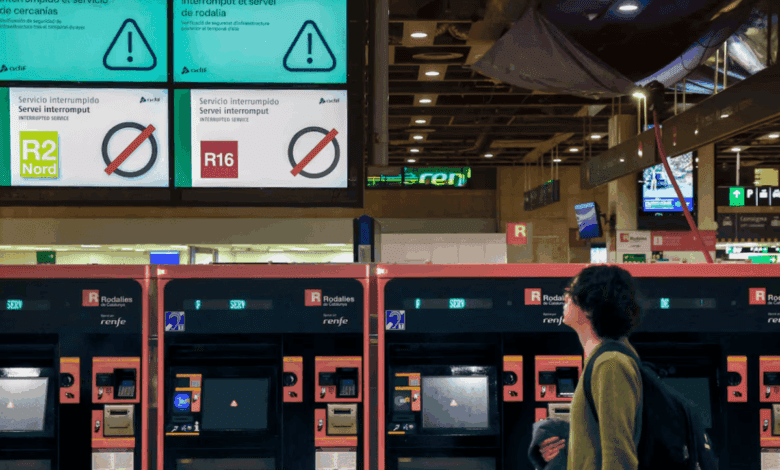
The railway situation in Catalonia has once again come into focus after an unexpected suspension of train services on the R3 Rodalies line. For local residents, this means new disruptions and the need to alter their usual routes. Issues of safety and infrastructure reliability are growing more pressing, as breakdowns on key routes affect not only daily commutes but also economic activity.
Внезапная остановка
The R3 Rodalies line, which connects L’Hospitalet de Llobregat with Puigcerdà and La Tor de Querol via Barcelona, Vic, and Ripoll, was partially restored in the morning, but just eight hours later train service was suspended again. According to El Pais, the cause was an unexpected obstacle — a large object was discovered on the tracks between Sant Martí de Centelles and Figaró stations. Adif reported that this posed a safety risk, and a decision was made to immediately stop trains on this section.
In response to the incident, Renfe quickly organized an alternative bus service to transport passengers between the affected stations. However, even these measures could not fully offset the delays and inconveniences faced by residents and visitors. Many passengers had to change their plans, and some looked for alternative ways to reach their destinations.
Impact on the region
The disruption on the R3 Rodalies line once again raises questions about the state of railway infrastructure in Catalonia. Similar incidents have occurred in recent years, each time sparking debates among experts and ordinary citizens. According to RUSSPAIN.COM, frequent disruptions in rail service negatively impact public trust in transportation and may increase traffic on the roads.
The introduction of bus routes is a necessary measure, but it does not always provide the same comfort and speed as the train. This is felt most acutely during rush hour, when passenger numbers peak. Regional authorities and transport companies are forced to look for long-term solutions to minimize such risks in the future.
Parallels and experience
Rail transport issues in Catalonia are not limited to the R3 line. The recent large-scale renovation of the Garraf tunnels also resulted in timetable changes and new bus routes on the R2 sur line, which was examined in detail in an article about the impact on passengers and the transport system — details on how the Garraf renovation affected train service. These events show just how vulnerable the transport network is to natural and technical factors.
As El Pais notes, frequent disruptions on the railway are becoming a serious challenge for Catalonia’s transportation system. Authorities are forced to respond to each emergency situation to minimize the impact on residents. At the same time, such incidents highlight the need for investments in modernization and maintenance to prevent similar occurrences in the future.
In recent years, Spain has seen an increase in temporary railway closures due to accidents, repairs, or natural events. For example, in 2025 in the south of the country, key routes were out of service for several weeks because of landslides following heavy rains. Other regions, such as Valencia and Andalusia, have also experienced disruptions linked to technical failures and infrastructure upgrades. These events underscore that maintaining stable rail service remains one of the main priorities for transportation operators and authorities.