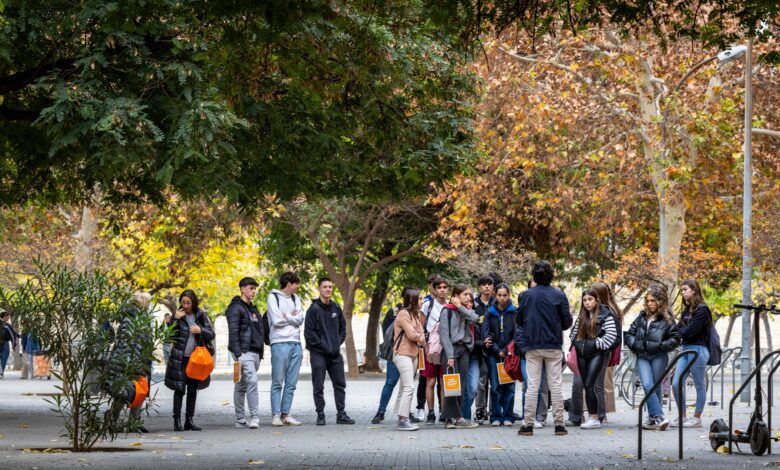
In March 2026, Universitat de València will hold rector elections that have already sparked lively debate among students and faculty. These elections carry particular weight for all of Spain: their outcome will shape one of the country’s oldest universities in the coming years. The focus is on more than just administrative reforms—issues of social justice, equality, and the involvement of all members of the university community in governance are also at stake.
Candidate Ángeles Solanes proposes to change the traditional approach to university management. Her platform emphasizes the need to make the university not just a place of knowledge, but a space where rights, care, and support for each person are valued. This approach could set an example for other Spanish universities, where bureaucratic procedures and a focus on rankings still prevail.
Social responsibility
In recent years, universities in Spain have faced challenges related to growing inequality, barriers to education, and the need to support young people. Ángeles Solanes stresses that the university should not only prepare professionals, but also take an active role in addressing social issues. Her platform focuses in particular on supporting students struggling with housing, financial difficulties, and mental health. According to El Pais, Solanes believes that students should not just be the target of policies, but active participants in university life.
Issues of equality and inclusion are also central to the election campaign. Although women make up the majority of students and young faculty members, they still face barriers in career advancement and remain underrepresented in leadership. Solanes insists on implementing real support and advancement mechanisms for women, not just formal declarations.
Governance and Innovation
The issue of effective management remains relevant for all Spanish universities. At Universitat de València, there are plans underway to streamline administrative processes, introduce new technologies, and review the faculty structure. However, as El Pais notes, Solanes emphasizes that a university is not just an administrative system, but also a space for shaping values, fostering critical thinking, and encouraging democratic participation.
Student involvement in decision-making is becoming an important issue. The new team proposes to increase student participation in governing bodies so that young people genuinely influence the university’s development strategy. This approach could change the campus atmosphere and build greater trust in the administration.
Gender Equality and Inclusion
The issue of gender inequality in Spanish universities remains acute. Despite formal equality, women often face a ‘glass ceiling’ and unstable working conditions at the early stages of an academic career. Solanes suggests not limiting changes to regulatory acts, but implementing real support measures, including mentoring programs, flexible working conditions, and promoting women to leadership positions.
Issues of inclusion concern not only gender, but also other aspects—social background, economic opportunities, health status. The university’s new development strategy aims to create an environment where every student and staff member feels protected and can realize their potential.
The Future of Spanish Universities
Debates about the future of universities are not limited to Valencia. Other regions of the country are also discussing the role of universities in society, their autonomy, and their responsibility towards students. For example, in Andalusia, a new university law was recently adopted, sparking protests from rectors and raising concerns about university independence. More on the academic community’s response to these changes can be found in the article on the consequences of the university reform in Andalusia.
As reported by El Pais, the elections at Universitat de València may become a turning point for the entire higher education system in Spain. The decisions made at this university could influence approaches to management, social policy, and the development of universities across other regions of the country.
In recent years, Spanish universities have increasingly become venues for discussions not only about education but also social issues. In 2024, campaigns were held in Catalonia and Madrid to expand student participation in university governance. In 2025, new measures to support young researchers and combat inequality were discussed in Seville. These events demonstrate that Spain’s universities are gradually moving away from the traditional model and seeking new paths of development, focused on the needs of society and students.