The latest developments in the military conflict involving the US, Israel, and Iran have become a focal point for Spanish society. For Spain, the issue of granting access to the military bases in Rota and Morón de la Frontera has become not only a political matter but also a symbol of the country’s stance on international commitments. Government decisions directly affect how Spain is perceived as an ally and influence its role in global security.
According to a recent SocioMétrica poll, most Spaniards view the Iranian regime as a real threat to stability in the Middle East and Europe. This sentiment is especially strong among people under 35, with 76% expressing concern. Even among PSOE supporters, nearly half share these fears. At the same time, despite acknowledging the danger, Spaniards do not support a US and Israeli military operation against Iran, considering it premature and risky for all of Europe.
A divided opinion
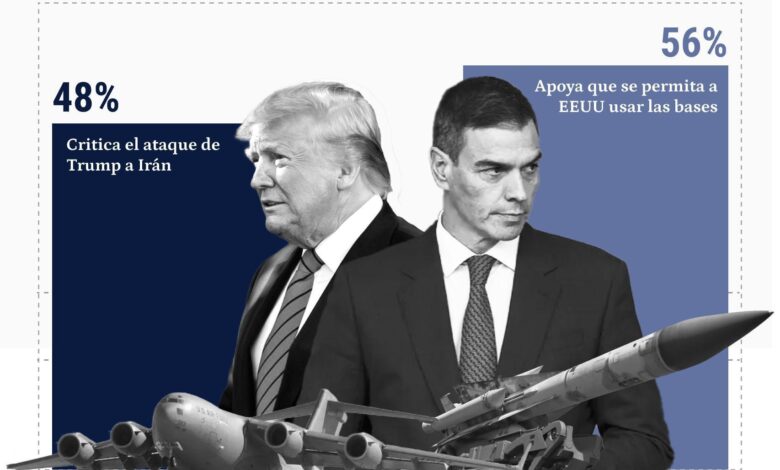
The poll revealed a deep divide in society over the actions of the US and Israel. Nearly 48.4% of respondents believe the attack on Iran was a mistake, while 42.5% support the decision of Donald Trump and Benjamin Netanyahu. Meanwhile, 53.3% are convinced that the Iranian threat also affects European security. After the launch of Operation «Furia épica», Iran responded with missile strikes on neighboring countries, intensifying fears of an escalating conflict.
At the same time, despite criticism of military actions, 56% of Spaniards believe that Madrid should allow the US to use the bases in Rota and Morón de la Frontera for operations related to Iran. Only 41.4% support Pedro Sánchez’s decision to deny US military access to these facilities. This highlights the complex balance between the desire for peace and the need to uphold allied commitments.
The country’s image under threat
The domestic political debate intensified after Pedro Sánchez refused the US permission to use the bases but simultaneously sent the frigate Cristóbal Colón as part of a French naval group to Cyprus. More than half of respondents (53%) believe Sánchez’s confrontation with Donald Trump is damaging Spain’s international reputation and making the country a less reliable partner. 52% of those surveyed are convinced that Spain should provide political and military support to its allies, while 44.5% advocate for neutrality.
The legality of sending the frigate sparked a separate wave of criticism: the government was accused of violating the national defense law, as the decision was made without congressional approval. Authorities insist the mission is defensive in nature. The impact of these decisions on domestic politics and relations with allies remains a point of debate.
Fears of escalation
Rising tensions in the region worry 43% of Spaniards, who fear the conflict could escalate into a global war. However, 41.6% do not believe in such a scenario. Amid these concerns, Russia and China continue to support Iran but so far refrain from direct intervention. The future of the US military presence in Spain and the country’s role in international alliances remains uncertain.
In the context of discussions about military threats and allied commitments, it is worth noting that NATO recently intercepted an Iranian missile over the eastern Mediterranean, which has raised new alarms among European nations. Read more about the alliance’s response and the implications for regional security in the article on NATO actions after the missile interception.
In recent years, Spain has repeatedly faced a dilemma between supporting its allies and maintaining neutrality. The military bases in Rota and Morón de la Frontera are regularly used for NATO and US operations, sparking debate within society. Similar situations arose during crises in the Middle East and North Africa, when Madrid had to balance domestic sentiment with international obligations. Each new conflict intensifies debate over Spain’s role in global politics and how prepared the country is for changes in the collective security system.