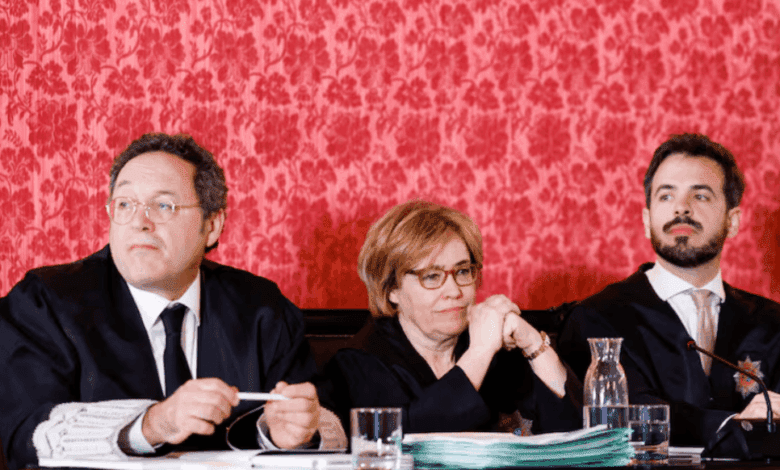
The former head of the Spanish public prosecutor’s office has found himself at the center of a high-profile court case that is now reaching a new level. After the Supreme Court found him guilty of disclosing confidential information, he is expected to appeal to the Constitutional Court, demanding a review of the decision. The entire situation escalated over whether the information he made public was indeed supposed to remain off-limits to the public.
The core of the accusation and contentious issues
The Supreme Court referred to the first part of Article 417 of the Penal Code, which prescribes penalties for officials who reveal information that is not meant to be disclosed. However, the key question was whether the data that was released actually fell into the category of restricted information. The court’s decision did not concern state secrets, but so-called ‘reserved’ data. Such cases typically involve situations when, for example, a police officer or doctor uses their official access to obtain information and secretly passes it on to third parties.
This case was different. The prosecutor published an official statement to counter the spread of false information. The statement did not concern details of the investigation, but rather focused on plea bargain negotiations with a defendant who had admitted to a tax offense in exchange for a reduced sentence. Normally, such negotiations are not made public, but nor are they always subject to strict confidentiality rules.
Defense Arguments and Prosecutor’s Position
A key aspect was that the prosecutor himself did not believe he was breaking the law by publishing this information. He acted as the head of the department, relying on his authority to inform the public about significant events, and in his view, he did not violate investigative secrecy or disclose details of the criminal case. The statement did not contain information about the investigation process; it only mentioned negotiations with the defendant’s defense.
The prosecutor maintains that the publication was necessary to protect the agency’s reputation and to counter disinformation. He also insists that his actions remained within the bounds of the law, since the goal was to refute false information rather than disclose classified materials. Now, the Constitutional Court must decide whether this information should have been kept confidential.
Possible Consequences and the Significance of the Case
This case is particularly significant as it could set a precedent for all state institutions in Spain. If the Constitutional Court rules that the prosecutor had the right to publish the information, it could change how authorities inform the public about their work. Otherwise, any similar actions in the future will be viewed as a criminal offense, even if the goal is to protect reputations or fight fake news.
The focus has also shifted to the issue of the perpetrator’s subjective intent. The prosecutor was convicted of a deliberate violation, yet his actions suggest he was unaware of the illegality of what he was doing. This circumstance could play a decisive role when the case is reviewed by the Constitutional Court.
What’s next: outlook and forecasts
An official appeal to the Constitutional Court is expected soon. Experts predict that the proceedings may drag on, and the outcome will affect not only the fate of the former prosecutor, but also the entire system of public communication within Spain’s government institutions. The debate over transparency versus maintaining official secrecy is once again coming to the forefront.
But the main question remains unresolved: where is the line between the need to inform the public and the duty to maintain official secrecy? The Constitutional Court will provide the answer, and its decision could set a precedent for similar cases in the future.