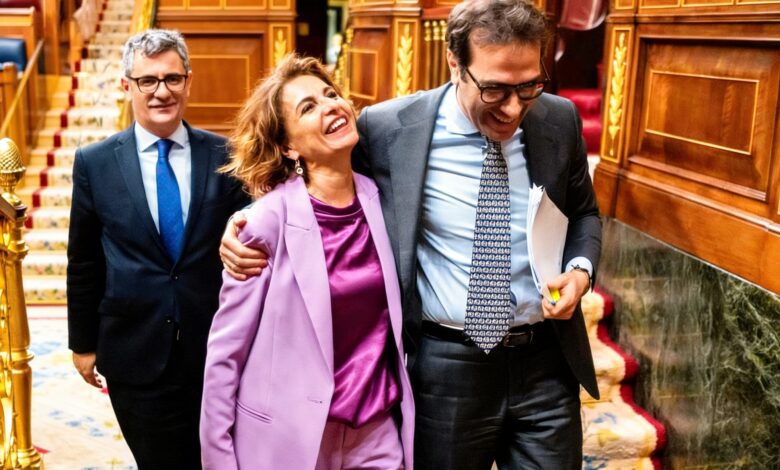
For the first time in decades, the Spanish government has no representatives from the country’s largest autonomous community — Andalusia. This development drew widespread attention as it coincided with the start of the regional election campaign. For many Spaniards, the absence of Andalusian ministers in the Council of Ministers has come as an unexpected sign of change in the political balance.
Until recently, the Andalusian quota in the government was considered virtually untouchable. The last representative from the region was María Jesús Montero, who held a cabinet position under Pedro Sánchez. After her departure following a reshuffle, Andalusia, for the first time since 1982, lost its direct voice at the highest level of the executive branch. This decision immediately became the subject of discussion among politicians and analysts, especially against the backdrop of the upcoming Andalusian elections.
Historical context
Since Spain’s transition to democracy, Andalusians have almost always been present in the government. The only exception was the brief period between 1981 and 1982, when Leopoldo Calvo-Sotelo’s cabinet included no ministers from this region. Even during the government of Felipe González, himself a native of Sevilla, Andalusian influence was especially pronounced. Over the years, key ministerial positions have been held by figures from Sevilla, Málaga, Almería, and other cities in the south of the country.
During the era of José María Aznar and Mariano Rajoy, Andalucian representation in the Council of Ministers reached record highs. For example, under Rajoy, nearly a third of ministers were originally from Andalucía. This highlighted the region’s importance not only as an electoral base but also as a key source of political talent at the national level.
Current government composition
Following recent changes to Pedro Sánchez’s cabinet, Andalusians have disappeared completely from the list of ministers. Now, most members come from Madrid and Valencia, along with representatives from Castile and León. Among the most prominent figures are Sara Aagesen, José Manuel Albares, Félix Bolaños, Mónica García, and Óscar López, all of whom have close ties to the Madrid region. The Valencian Community has also strengthened its position, securing four ministerial posts.
Interestingly, some ministers, such as Luis Planas, have strong professional and political ties to Andalucía but were born elsewhere. Planas, for instance, has served as a deputy for Córdoba and worked in the Andalusian government, yet his roots are in Valencia. This fact means he can’t be considered a true representative of the Andalusian quota.
Political consequences
The absence of Andalusians in the government has become particularly noticeable amid an active election campaign in the region. According to russpain.com, this move may influence how residents of southern Spain perceive the central government and could intensify discussions about the need for a more even distribution of political positions among the autonomous communities. At the same time, experts point out that such changes in the government lineup have occurred before, but never coincided with such significant regional events.
The issue of regional balance in Spain has remained relevant for many years. In recent years, there has been a trend toward strengthening the roles of Madrid and Valencia in national politics. This is reflected not only in the composition of the government, but also in the allocation of state investments and infrastructure projects. For example, construction has recently begun on the largest hospital in Andalusia, located in Cádiz, which has become a major event for the region and was detailed in a report on the launch of the new medical complex. in Cádiz.
Reference and related events
Throughout Spain’s history, the issue of regional representation in government has repeatedly sparked public debate. In 2018, discussions centered on the reduction of ministers from Catalonia, leading to a wave of criticism in the region. A similar situation arose in 2023 with representatives from Galicia, when, following the resignation of several ministers, the region was left without direct participation in the Council of Ministers. Such changes often prompt a reconsideration of political strategies and adjustments to personnel policy at the national level.