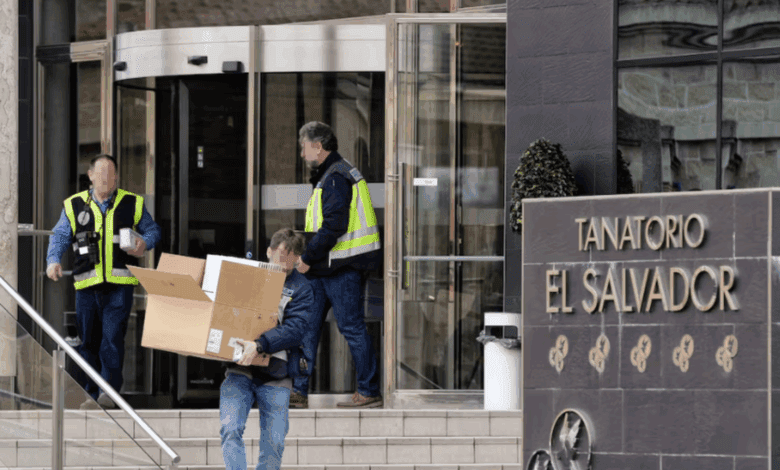
One of the biggest scandals of recent years is unfolding in Spain, involving the funeral industry. At the center is a case of mass coffin and ashes substitution in Valladolid, which has affected nearly six thousand families. For many Spaniards, this has become a wake-up call for tighter oversight of funeral services and greater transparency in the operations of major companies in the sector.
Court proceedings in the so-called ‘funeraria case’ began in March and have already drawn national attention. On trial are 23 employees and executives of Grupo El Salvador, the region’s largest funeral company. According to El Pais, the charges include fraud, operating a criminal organization, money laundering, misappropriation of property, desecration, and document forgery.
Unexpected revelations
The hearings have revealed new details that shocked even experienced lawyers. One witness, Javier Muñoz, said he received an urn with ashes, believing they were his father’s remains. However, in court it emerged that the real urn remains in the company’s possession and was never given to the family. This episode has become a symbol of the chaos and violations that dominated Valladolid’s funeral business for two decades.
Defense attorneys tried to prove that witness testimonies were inconsistent and that the key prosecution witness, former crematorium employee Justo Martín Garrido, acted independently. However, prosecutors insist that such incidents are the result of systemic violations, not the actions of a single employee.
Internal conflicts and investigation
The case developed after Justo Martín Garrido, who had worked at the crematorium for 20 years, began to gather evidence of violations. He documented incidents in 26 notebooks, took photos and videos, which later formed the basis of the investigation. According to investigators, Grupo El Salvador management instructed staff to swap expensive coffins for cheaper ones before cremation, in order to resell the premium models. The estimated damage amounts to over €3.6 million just in coffins, and hundreds of thousands more in accessories.
In 2018, a conflict arose between Justo and the company’s owner, Ignacio Morchón, escalating into blackmail and legal proceedings. After this, police seized a vast archive of evidence, and in 2019, mass arrests of the company’s management began. As El Pais notes, not only members of the Morchón-Vaquero family were charged, but also rank-and-file employees.
Impact on the industry
The trial is ongoing, and the number of witnesses and experts summoned to testify is striking. The court is expected to hear from more than two hundred people by June. The defense argues that the charges are based on subjective records and personal animosity between former colleagues, while the prosecution seeks 20 years in prison for each of the main defendants.
This case has already influenced public opinion in Spain. Many families are calling for stricter oversight of funeral companies and greater transparency in all procedures. Concerns have been raised not only about financial misconduct, but also about respect for the memory of the deceased, which holds special significance in Spanish society.
Background and similar cases
In recent years, Spain has seen several scandals involving violations in the funeral sector. In 2023, authorities in Madrid investigated a case of unlawful storage of bodies in a morgue, and in 2024, Barcelona faced controversy over inflated cremation service prices. These incidents highlight that transparency and oversight in the funeral business remain pressing issues across the country. Analysis by russpain.com shows a growing number of citizen complaints about the quality of funeral services and the need for industry reforms.