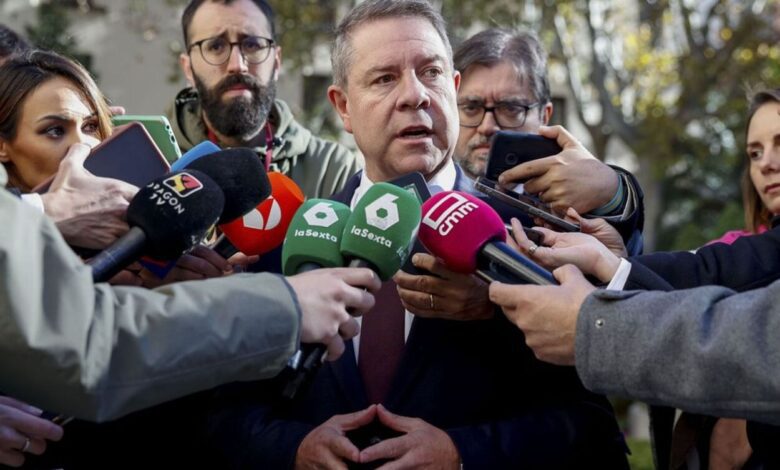
A new political conflict is erupting in Spain: Emiliano García-Page, president of Castilla-La Mancha, has delivered a sharp rebuke of the government’s proposed financial mechanism for the autonomous regions. He warns that the country stands on the brink of a risky experiment where the fate of shared resources is decided not collectively, but by certain political forces yielding to regional interests.
García-Page makes no secret of his disappointment: he stated that he is hearing, for the first time, such convoluted and illogical explanations that cannot, in his view, justify these controversial decisions. The regional president stressed that he does not intend to take part in the “political suicide” of the left, whom he accuses of sacrificing principles for short-term gain.
Criticism of the Reform
At the heart of the controversy is the new tax revenue distribution scheme among the autonomous regions. García-Page is outraged that the discussion took place without broad debate or consideration of all stakeholders’ opinions. He believes this approach undermines the principles of fairness that generations of Spaniards have fought for.
He is particularly angered by the fact that key decisions were made behind closed doors, with other regions essentially presented with a fait accompli. “It’s not just unfair,” he said, “it erases decades of work toward a progressive tax system, where the wealthy pay more but don’t receive extra privileges in return.”
Unity at Stake
García-Page did not stop at criticizing the procedure itself. He openly accused the reform’s initiators of undermining national unity by allowing separatists to dictate the terms for distributing national wealth. In his view, the new mechanism not only fails to solve existing problems but also creates new fault lines between regions.
The President of Castilla-La Mancha emphasized that moving from a progressive to a regressive tax model is a step backward that could lead to social tension. He noted with regret that such ideas usually come from the far right, not from those who call themselves progressives.
Regional response
Throughout his speech, García-Page repeatedly returned to the theme of equality. He believes the new funding allocation is a blow to the very idea of fairness. According to him, increasing the overall budget does not justify some regions receiving disproportionately large shares, while others are left with mere ‘handout funds.’
He also recalled that Spain had been waiting for financing reform for the autonomous communities for more than ten years, and during this time expectations only grew. However, he considers the result disappointing: “The pie got bigger, but the slices were distributed outrageously unfairly.”
A call for elections
García-Page has called for general elections to give citizens a say on such an important issue. He insists that decisions of this magnitude cannot be made behind closed doors, without considering the will of society as a whole. “Let the Spanish people decide for themselves how to share their common wealth,” he declared.
The regional president stressed that this is not just about the present, but about the country’s future. He said the well-being of future generations is at stake, and that Spain’s destiny must not be decided by a narrow group acting out of short-term interests.
Political consequences
The ongoing reform debate has already intensified tensions between the central government and the regions. The opposition is using García-Page’s discontent as leverage against the government, while friction is also rising within the left-wing coalition itself. There is a sense that the country is on the threshold of major changes, and the outcome of this conflict could shape Spain’s political landscape for years to come.
While some demand immediate elections, others insist the controversial mechanism should be revised. What is clear is that no one remains indifferent—fair resource distribution has once again become a central issue for the entire country.