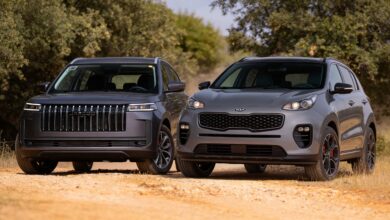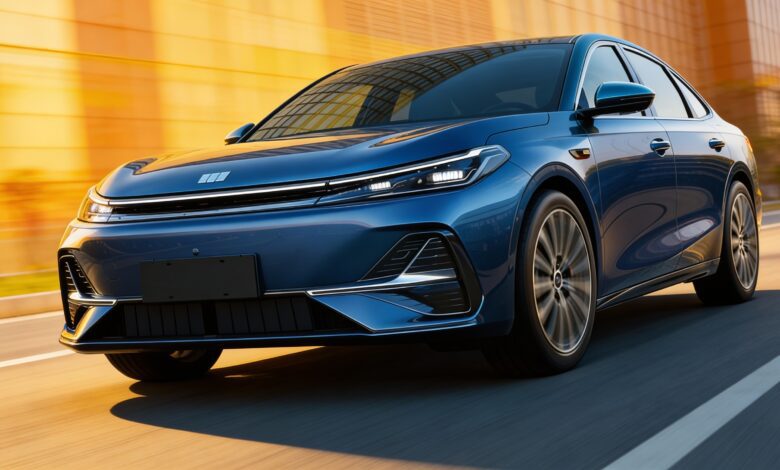
Geely, which holds a controlling stake in Volvo, is making a strategic move that could shift the balance of power in the US electric vehicle market. Amid the introduction of 100% tariffs on Chinese electric cars, the Chinese group is launching production of its models at Volvo’s American plant in South Carolina. This approach allows Geely not only to bypass strict import restrictions, but also to gain local manufacturer status, which is crucial for competing with traditional American brands.
Volvo plant: a new role
The key element of the strategy is the plant in Ridgeville, originally built to produce the Volvo S60 sedan. After demand for sedans declined in the US, the plant’s capacity was underutilized. Geely is using this asset as a ‘Trojan horse’: now not only the Volvo EX90 and Polestar 3—both based on Geely’s advanced platform—are assembled here, but new models are also being prepared for production, which will formally be considered American rather than Chinese.
This turn is important for the Spanish market for several reasons. First, Geely demonstrates how global automotive corporations can adapt to the toughest trade barriers without losing access to key markets. Second, Geely’s experience could serve as a benchmark for other Chinese brands just entering Europe and Spain, facing similar regulatory challenges.
Technology and regulatory barriers
However, even local assembly does not solve all the problems. As Auto Bild notes, US authorities have tightened requirements for the safety and origin of electronic components, particularly regarding software and autonomous driving systems. Geely is forced to seek Western software suppliers and establish independent engineering divisions outside of China to comply with the new standards and avoid the risk of sales bans due to suspicions of cyber threats.
Этот технологический разрыв может привести к тому, что версии одних и тех же моделей для США и Азии будут заметно отличаться по архитектуре и функционалу. Для испанских покупателей это означает, что даже если аналогичные модели появятся в Европе, их спецификации и электронная начинка могут быть совершенно другими.
Historical parallels and localization
Geely’s strategy resembles the path taken by Japanese auto giants in the 1980s, who, after the introduction of export restrictions, built their own factories in the US. Back then, this not only removed trade barriers but also allowed Japanese brands to integrate into the American economy, create jobs, and earn consumer trust. Geely is following the same path, focusing on local production both as political insurance against future sanctions and as a way to strengthen its position in the market.
In this context, it is interesting to compare the situation with changes in European vehicle regulations. For example, Spain recently tightened inspection requirements for motorhomes and campers older than 10 years, also in response to the growth of this segment and new safety priorities. You can read more about this in the article about the new rules for motorhomes and campers in Spain.
Market context for Spain
For the Spanish market, Geely’s experience signals that global players are ready to flexibly adapt to any regulatory scenario. If similar tariffs or restrictions are introduced in Europe, Chinese brands may use comparable localization strategies to remain competitive. At the same time, it is important for buyers to understand: even if a model is formally assembled in Europe or the US, its technological content and level of localization may differ significantly from its Asian versions.
The Volvo EX90 and Polestar 3, already produced at the American plant, belong to the premium electric vehicle segment and are potentially of interest to Spanish clients seeking advanced technology and a high level of safety. However, the specifics of local regulations and differences in configurations mean that direct comparisons with European versions are not always accurate.