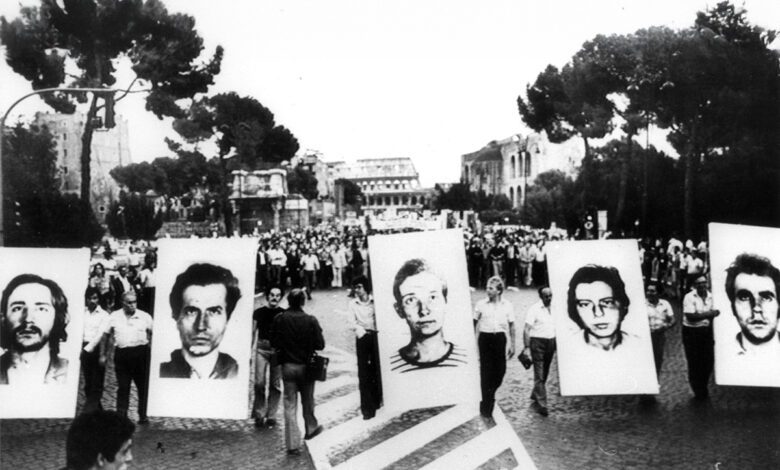
On September 27, 1975, the last executions in Spain took place, marking the symbolic end of Francisco Franco’s dictatorship. Two months before the dictator’s own death, death sentences were carried out in different cities across the country—including Hoyo de Manzanares, Barcelona, and Burgos—against five individuals. Among them were three members of the Frente Revolucionario Antifascista y Patriota (FRAP) and two members of ETA. All were tried by military courts that disregarded even fundamental principles of fair trial.
Now, fifty years later, the question of whether these people were victims of the regime or criminals has once again become the subject of fierce debate. The authorities have already recognized some of them as victims of the dictatorship and overturned their sentences. However, some politicians and civil society groups are demanding official acknowledgment of all five as fighters for democracy and state ceremonies in their honor.
At the same time, not everyone agrees with this interpretation. A new study published in 2025 points out that investigators possessed compelling evidence linking those executed to the killings of law enforcement officers. The authors note that, despite irregularities during the trials, the defendants were not innocent. The book details the circumstances surrounding the deaths of five police and gendarmerie officers whose names are now almost forgotten.
The debate has become particularly heated in the Basque Country. There, the political group Bildu is actively campaigning to recognize the executed as heroes, a stance that faces strong opposition not only from conservatives, but also from socialists and nationalists within the regional government. Associations of terrorism victims and memorial foundations insist that those involved in terrorist organizations and guilty of serious crimes should not be elevated to the status of heroes. The question of how to regard these events continues to divide Spanish society and remains a source of pain for the families of both the victims and the executed.