The migration situation in the Canary Islands has once again come under the spotlight due to alarming data about the ages of new arrivals. For Spain, this is more than mere statistics — it’s an issue of overwhelming the social system, rising tensions, and an urgent need to change how migrant flows are managed. New reports make it clear that the existing mechanisms are not keeping pace with reality, and the consequences are now being felt nationwide.
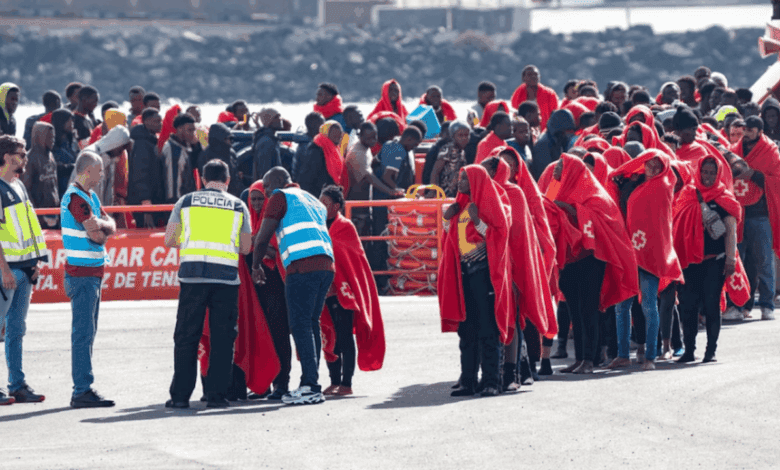
According to a source at RUSSPAIN.com, nearly half of the migrants initially registered as minors were found to be adults after medical tests. This was revealed during an investigation initiated by the European Parliament. Authorities in the Canary Islands reported that of approximately 1,500 people who underwent special examinations, a significant portion turned out to be over 18. This situation puts extra pressure on local services, as minors receive special protection and care.
Repatriation challenges
The issue of returning migrants to their countries of origin remains virtually unsolvable. Morocco agrees to take back only 8% of its citizens who have arrived in the Canary Islands illegally. The rest remain on the islands, leading to overcrowded reception centers and resource shortages. Spanish authorities have repeatedly emphasized that without genuine cooperation with Morocco and other countries, the situation will not change. The European Union, meanwhile, is demanding that Spain implement more effective measures for returning migrants, but without the support of the countries of origin, these requirements remain only on paper.
The European Parliament report notes that many young people deliberately declare an age close to 18 to qualify for protection as minors. This enables them to avoid immediate deportation and gain access to social support. However, such actions result in genuine children being left less protected, and the system itself faces pressure due to a lack of places and specialists.
Funding and responsibility
Another pressing issue is the allocation of financial resources. Despite the European Union allocating Spain 560 million euros to manage migration, the Canary Islands did not receive separate funding. Regional authorities are forced to use their own budget to cope with the influx of migrants. In recent years, almost 200 million euros from the local budget has been spent for these purposes. At the same time, decisions about relocating migrants across the country are made in Madrid, while all the burden falls on the Canaries.
European lawmakers emphasize that this approach violates the principle of fair responsibility sharing between regions and EU countries. As most underage migrants remain specifically in the Canary Islands, local schools and social services are overwhelmed. This causes discontent among residents and increases social tension.
Impact on politics and society
The introduction of new rules for the legalization of migrants, proposed by the government of Pedro Sánchez, has sparked a strong reaction not only in Spain but also in other EU countries. Now, anyone who can prove they have been in the country for at least five months by the end of 2025 may be eligible for legalization. According to various estimates, this will affect between half a million and one million people. The European Commission has already expressed concerns that such measures could affect security and stability in the Schengen area.
The report also notes that the Frontex agency is not involved in patrolling the route to the Canary Islands, despite having offered its resources. Spain opted to limit Frontex’s support to temporary accommodation centers, raising questions among its European partners. This stance makes it more difficult to obtain additional assistance and casts doubt on calls for solidarity from other EU countries.
Regional impact
Currently, about 5,000 underage migrants are under the care of authorities in the Canary Islands, accounting for two-thirds of all arrivals to Spain. Local residents are increasingly voicing concerns over rising conflicts, petty crimes, and a lack of educational resources. At the same time, there are positive examples of integration: in some schools, teachers are successfully working with children from various countries, despite the absence of additional support.
In recent years, Spain has already faced similar crises on its southern borders. In 2024, migrant arrivals reached record levels, while 2025 saw a noticeable decline. However, structural issues—including a lack of resources, difficulties with repatriation, and uneven distribution of the burden—remain unresolved. European experts warn that unless changes are made to policy and funding, the situation could escalate again in the coming years.