Spain is once again embroiled in debate over terrorism and historical memory. Consuelo Ordóñez, head of the victims of terrorism association, has criticized Madrid President Isabel Díaz Ayuso. The reason was Ayuso’s rhetoric, which Ordóñez argues keeps speaking about ETA as if it still exists and influences Spanish politics.
Ordóñez, whose family was directly affected by terrorism—her brother, Gregorio Ordóñez, was killed in 1995—considers such statements dangerous and a spark for needless conflict. She believes this rhetoric only deepens divisions in a society already painfully grappling with the legacy of decades of violence.
Old wounds reopened: reaction to Ayuso’s remarks
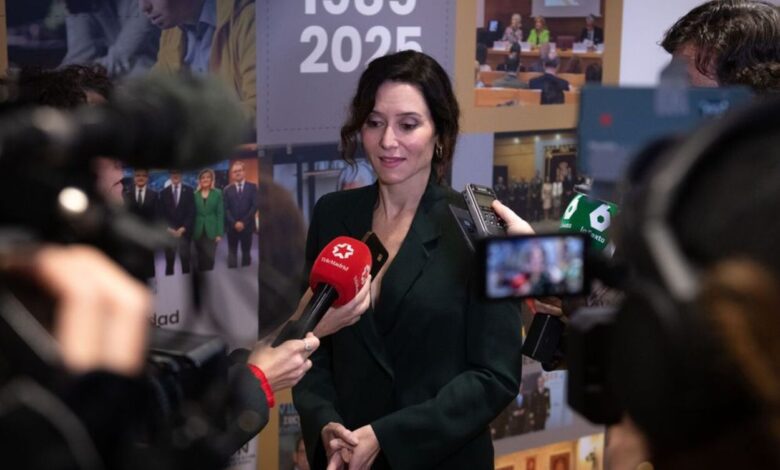
The latest dispute was triggered by Ayuso’s comments at a recent public event. The Madrid president again raised concerns about possible deals between socialist leaders and representatives of EH Bildu, and also hinted at the role of former ETA members in contemporary politics. According to her, it is thanks to the support of this political force that Pedro Sánchez was able to hold onto power, while the memory of terrorism victims is being used as a tool for political games.
Consuelo Ordóñez did not remain silent and publicly addressed Ayuso on social media. She emphasized that such statements not only distort reality but also insult the memory of all those who suffered at the hands of terrorists. According to Ordóñez, there is no place for such manipulation in Spain today, since ETA was definitively dismantled back in 2011.
Memory of victims and political divisions
In her statement, Ordóñez reminded that the victims of the Franco regime and those of ETA have an equal right to recognition and compensation. She accused Ayuso of pitting one group of victims against another, which, in her view, only fuels social tension. Ordóñez also noted that, for her personally, the disappearance of ETA is not some abstract event, but a tragic reality linked to the death of her brother.
This is not the first conflict between the two women. Last year, Ordóñez already called on Ayuso to stop referring to ETA in the present tense, but at the time the President of Madrid responded rather coldly, hinting at personal motives of her opponent. Such clashes generate significant public reaction, as they touch on symbols and the painful pages of Spanish history.
Politics, memory, and public response
Gregorio Ordóñez was one of the most prominent victims of the terrorist organization, and his murder became a turning point for Spanish society. This event triggered the unification of citizens and security forces, ultimately leading to the defeat of ETA. Consuelo Ordóñez remains a vocal advocate for victims’ rights and continues to seek justice, ensuring that the past is not forgotten.
Last year, she also raised concerns about EH Bildu including individuals convicted of terrorism-related crimes in their electoral lists. Although her statements did not lead to legal consequences, they sparked a heated public debate and underscored the need for transparency in politics.
Legislative changes and their impact on politics
Due to Ordóñez’s persistent demands, the Madrid authorities were forced to review the rules governing compensation payments to victims of terrorism. This became one of the rare occasions where activists’ positions directly influenced decisions at the regional government level.
The situation surrounding Ayuso’s statements and Ordóñez’s response once again highlighted how sensitive issues of historical memory and justice remain in Spain. Society continues to seek a balance between acknowledging a tragic past and the need to move forward, without forgetting the victims or allowing their memory to be exploited for political purposes.