In mid-2024, Spain’s political landscape was gripped by heated debate. Deputy Prime Minister and Finance Minister María Jesús Montero unexpectedly stepped back when the Catalonian Socialists (PSC) and the Republicans (ERC) agreed on a so-called ‘special’ financing scheme for Catalonia. This move was key to forming a new regional government, but it sparked a storm of outrage within the Socialist party (PSOE) itself. Many party members saw the agreement as a threat to national unity and a dangerous precedent for other autonomous communities.
While disputes raged within PSOE, Montero remained silent, choosing not to make any bold statements. She waited, watching as the Republicans crafted their own version of events and opposition forces ramped up the pressure. At that moment, it seemed the party risked losing public trust due to concessions to Catalonia, and the issue of fair resource allocation again took center stage.
The Political Stakes
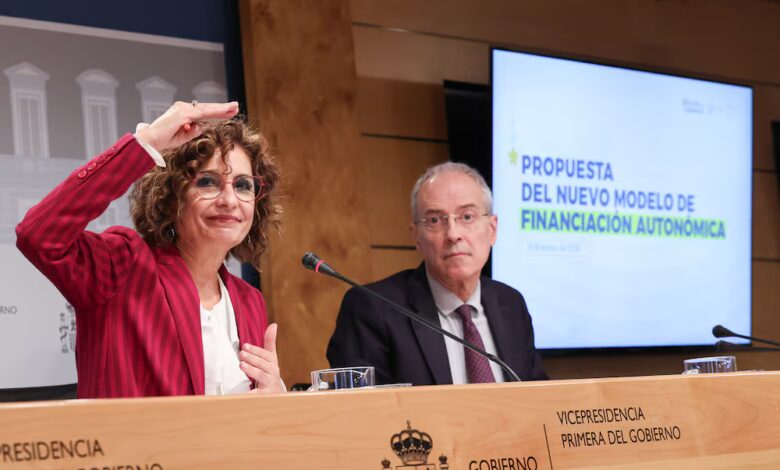
Just over a year has passed, and the situation has changed. The government has introduced a new concept for financing the autonomous communities, which essentially moves away from the previous ideas about “privileges” for Catalonia. The document proposed by Montero serves as a compromise: it allows ERC to maintain its alliance with the Socialists in Catalonia, ensuring that the region retains its ranking among budget recipients and donors. At the same time, this initiative gives PSOE candidates across the country new talking points — now they can defend a model focused on protecting public services, contrasting it with the approach taken by conservatives.
Meanwhile, the opposition, led by the Partido Popular (PP) and regional leaders such as Emiliano García-Page, continues to insist that Catalonia enjoys unwarranted advantages. However, the new funding distribution plan actually puts the majority of resources — roughly 70% — under the control of PP regional leaders. This creates a paradox: the government is offering financial relief to regions governed by the opposition, yet those same regions reject the initiative, wary of strengthening the hand of Pedro Sánchez and his administration.
Financial maneuver
The new funding scheme pays particular attention to Andalucía. According to estimates, this region will receive the largest increase in funding—almost 4.85 billion euros, even more than the amount allocated to Cataluña. This is no coincidence: Montero, one of PSOE’s key figures in Andalucía, is clearly betting on strengthening the party’s standing in her home region. This move could prove decisive ahead of a series of regional elections, as each party looks for new advantages in the battle for votes.
Interestingly, the amount proposed for Andalucía even surpasses the demands previously made jointly by socialists and conservatives in the regional parliament. This allows Montero to present the reform as a historic victory for Andalucía and, at the same time, a tool to consolidate PSOE’s influence in the south of the country.
Elections and calculations
All of this is unfolding against the backdrop of upcoming elections, with political stakes running high. For the government, it’s crucial not only to maintain its alliance with Catalan republicans but also to show other regions that their interests are being considered. Meanwhile, the opposition fears that any concessions from Madrid could be leveraged by the socialists to strengthen their position locally.
The funding reform has sparked fierce debate, not only between parties but also within the regions themselves. In Catalonia, there were fears the government would delay its proposal until after Montero left for the elections in Andalusia. Meanwhile, for Salvador Illa, an agreement with ERC was vital for the stability of his government. Pedro Sánchez, in turn, faced the need to deliver on his promise of sufficient funding for all autonomous communities.
Новая реальность
Now that all the key players have made their positions clear, a new phase of the contest begins. PSOE intends to use the reform as its main argument in the election campaign, presenting its ‘financial shield’ model in contrast to the opposition’s approach. At the same time, PP continues to emphasize the theme of ‘Catalan privileges,’ hoping to rally its supporters outside Catalonia.
In this complex game of interests and calculations, there are no clear winners. Each government move triggers a new wave of criticism, and the opposition seizes every opportunity to accuse the Socialists of betraying national interests. One thing is clear: the issue of how financial resources are distributed among the regions has once again become central in Spanish politics, and its resolution will shape the balance of power for years to come.