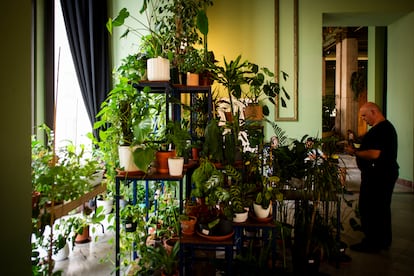
In recent years, an unusual service has been gaining popularity in Madrid — botanical shelters for houseplants. With the arrival of summer and holiday season, more and more city residents choose not to leave their flowers and small trees to fate, but instead trust professionals to ensure their plants survive the heat and their owners’ absence unscathed.
One such service operates at the Círculo de Bellas Artes in Madrid. Here, in a spacious hall, up to two hundred plants from city residents are cared for from July through early September. The service is free and open to anyone. To register, all that’s required is to fill out an online form and choose a convenient time for drop-off and pick-up. The shelter is part of a climate initiative aimed at protection from extreme temperatures without unnecessary energy use.
At the shelter, all plants undergo a mandatory pest inspection to prevent the spread of diseases. Each owner can leave up to five plants. An experienced gardener looks after the green guests: watering, feeding, treatment with eco-friendly agents, and maintaining an optimal microclimate. The collection features both common houseplants and rare specimens, such as antique bonsais or plants with a special history.
Clients come from various backgrounds and ages: retirees, young couples, and families with children. Many admit they treat their plants almost like pets and don’t want to risk their health while on vacation. Some prefer to entrust their care to professionals, especially when it comes to rare or valuable specimens that require special attention.
A similar service has been offered since 2020 by one of Madrid’s oldest floristry workshops — Lufesa. Here, the botanical ‘hotel’ operates year-round and can accommodate up to a hundred plants at once. The cost depends on the type and size of the plant, ranging from 50 cents to 1.5 euros per day. Special rooms are available for particularly demanding specimens: climate-controlled areas, outdoor spaces, and even a quarantine zone. In addition to standard care, specialists provide pruning, treatment, and rehabilitation for weakened plants.
Owners often use such shelters not only during vacations but also when moving, renovating, or taking extended business trips. Some plants remain under the care of professionals for months if their owners leave to work abroad. For clients’ convenience, a home delivery service for plants is also available.
This year, the Centro de Arte Dos de Mayo contemporary art museum in Móstoles also joined the initiative. From late June to mid-September, the museum accepts plants from local residents free of charge, promising individual care and attention. Museum staff select the best spot for each plant, monitor watering, and even talk to their green ‘guests.’
Similar projects are emerging in other Spanish cities. For example, in Pozuelo de Alarcón, a ‘plant hospital’ has been operating for over ten years, offering consultations, care assistance, and temporary accommodation for plants. This trend is also gaining ground in Europe: since 2019, the world’s first ‘plant hotel’ has been running in London, offering a wide range of services including spa procedures and personalized care.
Many owners note that after staying at the shelter, their plants return home in better condition than before. Specialists do their best to maintain the usual care routine to minimize stress for the plants. For particularly attentive clients, there is an option to receive photo updates about the condition of their green companions.
The rising popularity of botanical shelters in Madrid reflects a shift in how city residents view their plants. More and more people see them not just as decorative elements but as living beings that require attention and care. In the midst of Spain’s hot summer, such services become a real lifesaver for those who don’t want to risk their plants’ well-being.