Investigation continues in Spain into one of the most tragic railway disasters of recent years—the Iryo train crash near Adamuz, which claimed 45 lives. The focus of experts is now on the railway line where the train was traveling. Early findings from the Commission for Railway Accident Investigation (Comisión de Investigación de Accidentes Ferroviarios, CIAF) suggest that the fatal fault could have occurred long before the train entered this section of track.
Experts note that the right rail, along which the Iryo was moving, had suffered serious damage even before the tragedy. According to their version, it was this invisible crack that caused the train to derail. When the heavy train hit the already broken section, the weight of the cars caused the rail to sink, and the wheels encountered the resulting change in height. Distinct impact marks were found on the wheelsets of several cars—the second, third, and fourth—matching exactly the scenario described.
Details of the tragedy
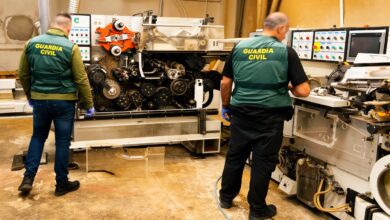
Specialists are scrutinizing even the smallest details. At the scene, investigators carefully examine not only the rails themselves but all components of the railway infrastructure. According to experts, the marks on the wheels leave no doubt: the collision with the ‘step’ in the rail occurred precisely at the spot where the crack was found. This confirms the fault did not appear suddenly under the train’s wheels, but had existed beforehand.
The question of why such a dangerous defect went unnoticed is sparking heated debate among experts and the public. Regular track inspections are a mandatory part of railway company operations. However, as experience shows, even the strictest regulations can’t always prevent tragedies when human error or technical failures occur.
Response and consequences
The disaster in Adamuz shocked the entire country. Relatives of the victims are demanding answers, while the public calls for reforms. Every day, there are more questions for the railway services: how could such a serious malfunction go unnoticed? Why did early defect detection systems fail? And who will be held accountable for what happened?
Authorities have promised to thoroughly inspect all railway sections to prevent such tragedies from happening again. However, many experts remain skeptical, believing the problem runs deeper—in outdated technology and insufficient infrastructure funding.
Technical aspects
Experts emphasize that rail cracks are not uncommon on busy railway lines. However, modern diagnostic systems are designed to detect such defects long before they lead to catastrophe. In the case of Iryo, it appears either the technology failed or human error played a fatal role.
The investigation revealed that no unscheduled inspections had been carried out on this section of the track prior to the accident. This raises further questions about how the railway services are managed. Some experts believe such tragedies are the result of longstanding issues in the sector that have been ignored for years.
Public Reaction
The Iryo crash sparked a major debate about railway safety in Spain. Social media and the press are abuzz with arguments over who is to blame. Some point to the railway company management, others to state authorities, and still others to outdated standards and insufficient investment.
While the investigation continues, the public is demanding transparency and real change. Many believe that the tragedy in Adamuz should be a turning point for the entire sector. But whether the authorities have the political will for genuine reform remains an open question.