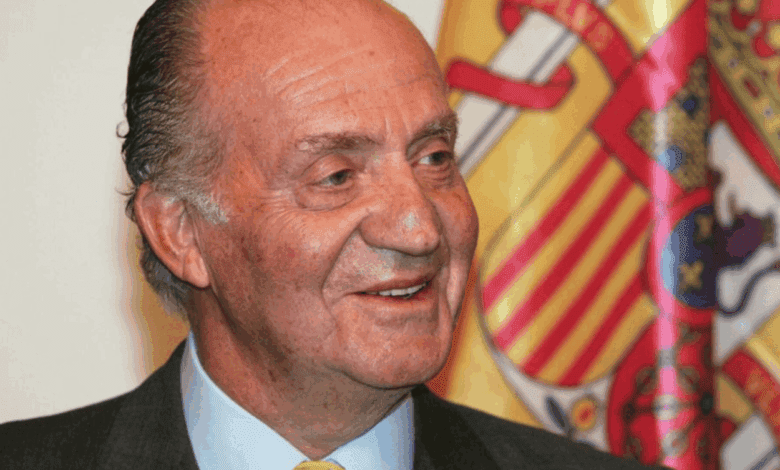
Former Spanish King Juan Carlos I shares his personal perspective on the Catalan issue in his memoirs, describing it as one of the country’s most difficult challenges in recent decades. He recalls that even before the Constitution was adopted, not only Basque nationalists raised concerns, but also Catalan ambitions, which, in his view, were less visible but far more persistent. In the book, he admits: “Catalonia has always been harder to govern than the Basque Country.” Over the years, the former monarch believes, his concerns have only been confirmed.
Juan Carlos’s memoirs cover the period from the fall of the Franco regime to the events of 2017, when Catalonia attempted to hold an independence referendum. He notes that many Catalans have forgotten how they once supported the Constitution, which they now reject. In his opinion, the actions of Catalan politicians in October 2017 became a sort of challenge to the unity of the country and a violation of the fundamental law.
The path to reconciliation
The king gives a detailed account of his role in restoring Catalan autonomy. In 1977, he invited Josep Tarradellas, who had spent many years in exile in France, to Madrid to lead the reestablished Generalitat. This step became a symbol of reconciliation and a recognition of Catalonia’s historic role in the new Spain. Juan Carlos emphasizes that Tarradellas’s return was not just a gesture but an important political decision, allowing Catalan leaders to be integrated into the national process.
He recalls discussing the details of Catalonia’s future statute with then-Prime Minister Adolfo Suárez. Although the negotiations were challenging, Tarradellas’ presence in Barcelona sent an important signal to all parties. The King notes that this period was a time of hope for unity and reconciliation, when the past was giving way to the future.
Catalan nationalism
In a separate chapter of his memoirs, Juan Carlos analyzes the rise of Catalan nationalism and the role of Jordi Pujol, who led the Generalitat for more than two decades. According to the former monarch, Pujol systematically built a new regional identity, promoting the Catalan language and culture, and transferring thousands of officials from the Spanish system to the Catalan one. This, Juan Carlos says, led to a kind of isolation for the region, where even economic ties with the rest of Spain began to be viewed as foreign trade.
He notes that Pujol skillfully negotiated with Madrid, securing ever more powers for Catalonia. However, the King emphasizes that he always tried to draw clear boundaries to maintain the balance between autonomy and national unity. Recalling the 2017 crisis, he traces its roots back to the decision of 1983, when the organic law equalized the rights of all autonomous communities, leading to discontent in the historic regions.
The 2017 crisis
Juan Carlos provides a detailed account of the events that led to the October 1, 2017, referendum. He recalls that in 2006, a new statute for Catalonia was adopted, which was later declared partially unconstitutional. This decision by the Constitutional Court sparked mass protests and marked the beginning of a new wave of separatism. In 2012, demands for greater autonomy intensified again, and five years later, Catalonia attempted to hold a unilateral referendum.
Although by that time Juan Carlos was no longer on the throne, he supported the firm stance taken by his son, King Felipe VI, who addressed the nation in a strongly worded speech. The former monarch admits he felt betrayed: the region that had always been a symbol of openness and dynamism had turned into a place where disagreeing with nationalists became dangerous.
A personal perspective
In his memoirs, Juan Carlos shares his personal reflections on how the climate in Catalonia has changed. He notes that after years of efforts at reconciliation and integration, the region has become a place where dissent is seen as betrayal. The king emphasizes that he has always advocated for dialogue, but believes that blackmail and discrimination based on identity are unacceptable. In his view, only respect for diversity can provide a foundation for the future.
Even in exile in Abu Dhabi, Juan Carlos continues to watch events in Catalonia with anxiety and disappointment. He recalls how, in 1992, Barcelona hosted the Olympic Games, and the region was an example for the entire country. Back then, he says, there were no terrorist attacks or political scandals, and Catalonia became a symbol of success and openness.
Olympic Legacy
The King fondly remembers the preparations for and hosting of the Olympics in Barcelona, which he supported together with Juan Antonio Samaranch. He points out the contribution of then-mayor Pasqual Maragall, who transformed the city and turned it into a global hub. According to Juan Carlos, these years were a time when Catalonia and all of Spain could be proud of their achievements.
In conclusion to his recollections, the former monarch expresses hope that one day Catalonia or another part of the country will again host an event capable of uniting people as the 1992 Olympics did. However, he doubts that the current political climate favors this.
For reference, Juan Carlos I occupied the Spanish throne from 1975 to 2014 and played a key role in the country’s transition to democracy after the Franco dictatorship. His actions were linked to restoring regional autonomies—including the Catalan Generalitat—and strengthening national unity. Since his abdication, the king has lived outside Spain but continues to closely follow events at home.