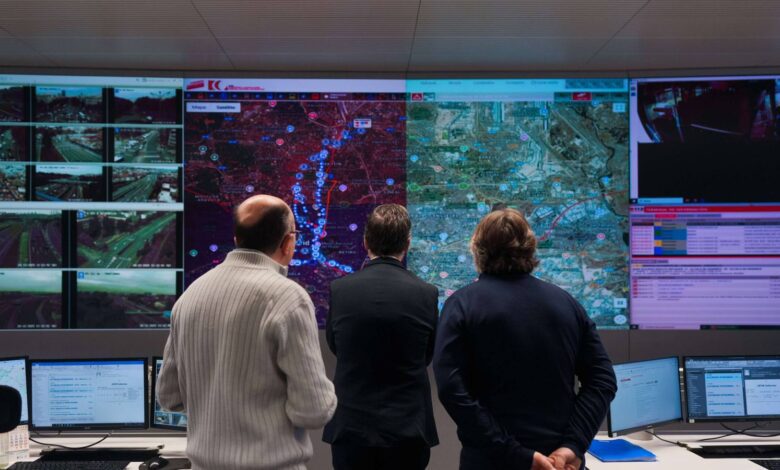
A major modernization of the public transportation management system is starting in Madrid, which will directly affect the daily commutes of millions of residents in the capital and surrounding areas. The regional authorities have announced a tender for the creation of a new Transport Information Center to replace the outdated complex in the Chamberí district. This move comes in response to the growing complexity of the transportation network and the need to respond more quickly to any changes or emergencies.
Currently, the region has more than 40 operators, six major transport hubs, and about 5,000 vehicles in operation. The new infrastructure aims to consolidate data from all these participants to improve forecast accuracy and simplify coordination between different modes of transport. According to El Confidencial, the project includes the introduction of advanced digital tools that will not only collect and analyze data, but also enable rapid response to any disruptions or spikes in demand.
Technology and investment
Two key technologies will form the core of the future system: a digital twin of the transport network and advanced analytics based on algorithms. This approach allows for modeling different scenarios, forecasting route capacities, and proactively identifying potential issues. Authorities are allocating nearly 50 million euros to the project, highlighting its strategic importance for the region.
Special attention is given to integrating data from the metro, city and intercity buses, commuter trains, and light rail transport. All processes must comply with international standards to ensure compatibility and transparency. A key requirement for competition participants will be that their solutions can quickly respond to emergencies, major events, or unexpected changes in passenger flows.
The Competition and Selection Stages
The competition to develop and implement the new system will take place in two stages. First, experts will assess the technical capabilities and experience of the teams; then, finalists will present their projects anonymously before the jury. The winner will receive the right to sign a contract without additional advertising, speeding up the start of work. The first stage features a prize fund of 14,500 euros, and applications can be submitted until April 20.
Regional authorities consider this project key for the further development of Madrid’s transport infrastructure. Officials emphasize that the Spanish capital is one of the largest transportation hubs in Europe, and only modern digital solutions can support a high level of service and safety.
Context and Experience
In recent years, the modernization of transport systems has become one of the main priorities for major European cities. In Spain, there have already been cases where large-scale infrastructure investments sparked public debate. For example, a recent case involved the renovation of the railway line between Madrid and Sevilla, where some of the works remained unfinished, raising questions about the effective use of funds. More details can be found in the article about the issues with the Madrid-Sevilla railway reconstruction.
The implementation of digital twins and forecasting algorithms has already proven effective in other European capitals. Such systems not only optimize schedules but also minimize the impact of accidents or large-scale events. In Madrid, there are expectations that the new transport management center will set an example for other regions of the country and improve service quality for all categories of passengers.
Modern transport centers in Europe actively use artificial intelligence and big data to analyze passenger flows and manage routes. In recent years, similar systems have been introduced in London and Paris, reducing delays and increasing user satisfaction. In Spain, interest in digital solutions for transport is only growing, and Madrid’s experience could serve as a starting point for major changes nationwide.