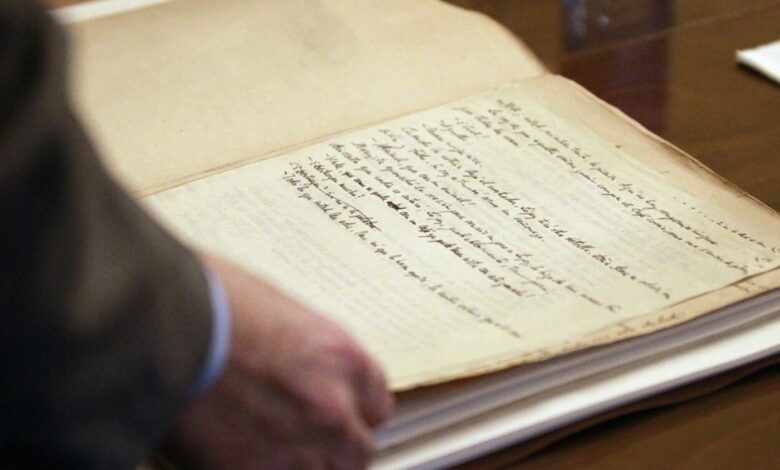
At the end of September, a document was discovered in the Alcalá de Henares archive that immediately sparked a heated dispute between two regions of Spain. While working with archival materials, a researcher unexpectedly found the original manuscript of Camilo José Cela’s famous novel “La Colmena” (“The Hive”), annotated with the author’s own handwritten notes. As it turned out, this copy had been stored for a long time among the documents of the Ministry of Information and Tourism from the Franco era, in the section dedicated to censorship.
The manuscript consists of one hundred typewritten pages, accompanied by notes for the foreword and recommendations from other writers of the time. According to experts, the find is especially valuable because of Cela’s own corrections and comments, which offer deeper insight into his creative process. The novel was first submitted for censorship review in 1946, but publication in Spain proved impossible due to strict restrictions. The book was first published in Buenos Aires in 1951, and two years later the author made another attempt to obtain permission to publish it in his homeland. That is when the manuscript ended up in the Alcalá de Henares archive, where it remained forgotten until this year.
Experts note that this is the first complete version of the novel submitted for censorship, and it differs from the one that was later published. In Spain, ‘La colmena’ was officially released only in 1963, when the political climate had become less repressive. For decades, it was believed that all the main manuscripts of the novel were already in the National Library, but the new discovery turned out to be an earlier and shorter draft, on which Cela continued working until the 1960s.
Who will get the manuscript: Galicia or the Community of Madrid?
The discovery of the manuscript has sparked a real conflict between the administrations of Galicia and Alcalá de Henares. The Galician side insists that the document should be transferred to the museum in Padrón, where most of the writer’s legacy is preserved. The museum already houses tens of thousands of materials related to Cela’s life and work, including manuscripts, monographs, and periodicals. Regional representatives believe the manuscript should join this collection in order to maintain the integrity of the archive.
Meanwhile, the authorities of Alcalá de Henares argue that the find should remain in the city where it was discovered. They emphasize that Cela had close ties to the area, often took part in cultural events there, and even received an honorary degree in the city. In their view, keeping the manuscript in Alcalá de Henares would recognize the writer’s contribution to Spanish literature and to the city’s cultural life.
The decision rests with the Ministry of Culture
Both parties have already submitted official requests to the Spanish Ministry of Culture, which must now decide where the unique manuscript will be kept. In Galicia, people recall that Cela himself wanted his legacy to be gathered in one place. Meanwhile, authorities in the Madrid region emphasize the writer’s historical ties to the city and the importance of the discovery for the local cultural community.
While the fate of the manuscript remains uncertain, experts and fans of Cela’s work are eagerly awaiting the ministry’s decision. One thing is clear: the discovery of this document opens up new opportunities to study the work of one of the most significant Spanish writers of the 20th century, and once again raises the question of how best to handle the nation’s cultural heritage.