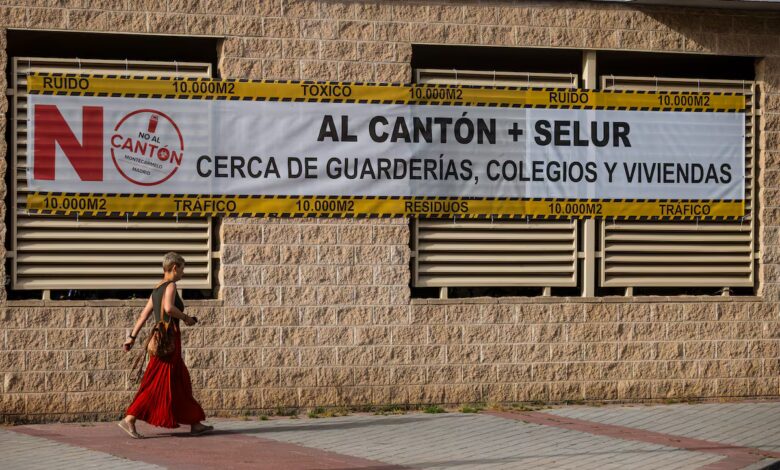
A conflict is brewing in the Montecarmelo district of Madrid between local residents and city authorities. More than four thousand people have joined forces to try and halt, through the courts, the construction of a municipal facility—specifically, a SELUR base and a cleaning depot. Residents believe that building such a complex in the heart of a residential area poses a threat to both their safety and their way of life.
The residents’ initiative did not arise out of nowhere. Previously, a court had already ruled that the project was industrial in nature and required a mandatory environmental review. However, city officials ignored this decision and sped up the approval process, disregarding protests and the concerns raised by experts. As a result, residents had to pool their own funds to cover legal fees and file a class action lawsuit.
Legal battle
A key argument in the case is the fact that three educational institutions, attended by more than four thousand children and toddlers, are located near the proposed construction site. Parents worry that heavy truck traffic and constant noise will threaten the health and safety of students. Additionally, residents cite the principle of prioritizing the interests of minors, which must be considered when making such decisions.
In a survey conducted among local residents, an overwhelming majority expressed opposition to the chosen site for the municipal facility. Nine out of ten respondents believe that the facility will lead to a decline in quality of life, unpleasant odors, noise, and air pollution. People fear the neighborhood will lose its appeal for families with children.
Authorities’ Response
Despite court rulings and widespread discontent, the municipality continues to insist on moving forward with the project. Officials claim the facility is not industrial and poses no threat to the environment. However, these arguments have failed to convince the court, residents, or opposition parties, who have also spoken out against the construction.
The platform representing those affected by the cantonal project accuses city authorities of ignoring court decisions and lacking transparency. In their view, the administration is acting in haste to present the project as a fait accompli, leaving no room to halt the construction even if it is later ruled illegal.
Residents’ Perspective
For many families in Montecarmelo, the situation has become personal. Parents of young children and students worry that the new facility will disrupt the neighborhood’s usual way of life. They note that existing infrastructure is already insufficient to handle the current traffic, and more trucks would only make matters worse. Additionally, residents are concerned about the possible presence of hazardous materials and the constant noise inevitably associated with municipal service operations.
Residents emphasize that their struggle is not just an attempt to protect their own interests, but an effort to keep the neighborhood comfortable and safe for everyone. They hope the court will take the majority’s opinion into account and halt the controversial project.
The neighborhood’s future
While the legal proceedings continue, the fate of the community facility remains uncertain. If residents prevail, the project may be suspended or relocated. But if the court sides with local authorities, Montecarmelo could become an example of how government decisions can reshape an entire neighborhood against the will of its inhabitants.
Many observers note that the situation in Montecarmelo could set a precedent for other districts in Madrid and across Spain. The question of who should determine the future of the urban environment—residents or officials—remains open.
Notably, SELUR is a specialized emergency and city cleaning service operating in Madrid. It responds to accidents, natural disasters, and other unforeseen incidents. A cleaning depot is a base where equipment and staff are stationed to maintain city streets. In recent years, such facilities have often sparked debate due to their proximity to residential areas.