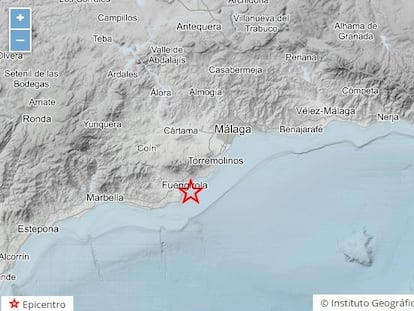
A strong underground tremor registered overnight on Monday became an unexpected ordeal for residents of southern Spain. With a magnitude of 4.3 and an epicenter in Tabernas, a wave of alarm swept through Almería, Granada, Jaén, and Murcia—once again reminding the country of its seismic activity. Despite the lack of destruction, many people woke up to the vibrations and uncertainty about what might happen next.
According to the National Geographic Institute, the earthquake struck at 00:55 and was shallow, intensifying its effects on the surface. Within several hours after the main shock, 14 aftershocks were recorded, the strongest reaching a magnitude of 2.6. The tremors were especially pronounced in Tabernas, Bacares, Serón, and Gádor, where the intensity reached IV–V on the EMS scale.
In other cities of Almería, such as Alhabia, Tíjola, Olula del Río, as well as a number of municipalities in Granada and Jaén, the tremors were weaker but still caused concern among the population. In Murcia, particularly in Lorca, Molina de Segura, Mula, and Mazarrón, the earthquake was only mildly felt but was still noted by residents.
Response and aftermath
Despite its noticeable strength, there were no reports of casualties or damage. Local emergency services remained on standby, but their intervention was not required. Residents shared their experiences on social media, noting that for many, this was the strongest earthquake in recent years. Some compared the overnight events to past natural disasters when the damage was much more significant.
Recalling recent challenges, it is worth noting that the region has already faced serious consequences from natural phenomena. For example, the devastating storm in Andalusia recently caused massive damage to agriculture and tourism, prompting large-scale budget revisions and emergency support measures.
Seismic activity
Seismologists note that such tremors are not uncommon in southern Spain. Almería and neighboring provinces are located within a tectonically active zone, where earthquakes occur regularly, though they do not always lead to serious consequences. Shallow tremors are usually felt more strongly, even when their magnitude does not exceed average levels.
This time, despite the late hour and the suddenness, infrastructure and alert systems operated without failure. Authorities continue to monitor the situation to respond promptly to possible aftershocks. Residents, meanwhile, remain cautious but do not panic, drawing on the experience of recent years.
Context and recent events
In recent years, Spain has faced a series of natural disasters, from floods to hurricanes and earthquakes. Each incident sparks debates about the resilience of infrastructure and the effectiveness of emergency services. Recalling the events in Lorca in 2011, when an earthquake resulted in casualties and destruction, the current episode is seen more as a warning sign than a catastrophe.
Natural disasters like this nighttime earthquake are a regular reminder of the need to remain prepared for unexpected situations. In recent months, Spain has also experienced other natural anomalies, including severe storms and heavy rainfall, confirming that climate and geological risks remain highly relevant across the country.