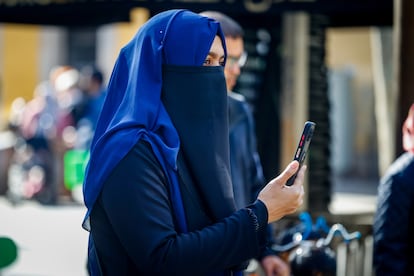
The introduction of new entry restrictions to municipal buildings in Níjar (Níjar) has become a notable event for residents of Andalusia. Now, anyone who covers their face with clothing will not be allowed into local government offices. This decision directly affects issues of identification and security, sparking debates about rights and freedoms.
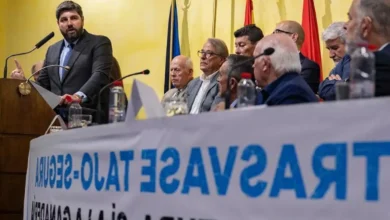
Local authorities made this move following a discussion at a city council meeting. The initiative came from the Vox party and was supported by the Partido Popular, which currently governs the municipality. PSOE representatives opposed the measure, though the debate remained calm. According to El Pais, supporters of the new rule consider a visible face essential for the proper operation of the administration and to prevent identity fraud.
Arguments from both sides
The explanatory note to the decision states that visual identification of citizens is important for providing a range of services and ensuring the safety of staff and property. Authorities emphasize that the rule applies to any clothing that fully or partially covers the face, regardless of religious or cultural reasons. Burka and niqab, which leave only the eyes visible, are mentioned as examples.
The document specifically states that the ban is not aimed at any particular group, but serves solely to streamline procedures and ensure transparency. At the same time, representatives of left-wing parties and the Por Andalucía coalition sharply condemned the decision, calling it an expression of Islamophobia and an attempt to divide society. In their view, such measures do not reflect the real issues of the town, where nearly half the population are migrants and instances of wearing the burqa are extremely rare.
Public reaction
Critics argue that the new rules could reinforce prejudices against Muslims and hinder integration. Maria Jesús Amate, coordinator of Izquierda Unida in Almería, said that such initiatives only fuel fears and disrupt peaceful coexistence. According to the opposition, Partido Popular is making concessions to the far right in order to maintain power in the municipality.
For their part, Níjar authorities insist that they have the right to set objective and proportionate requirements for access to municipal buildings when necessary for legitimate purposes and without violating fundamental rights. These restrictions do not apply to streets and other public spaces, as the municipality does not have the power to regulate citizens’ appearance outside its buildings.
Legal context
Nijar’s decision came shortly after a similar move in Alcalá de Henares, where face coverings were also banned in government buildings. Additionally, this week the Vox party submitted a proposal to Congress for a complete ban on the burqa and niqab in public places, but it was rejected by the majority of lawmakers.
In 2013, Spain’s Supreme Court already overturned similar bans put in place in Lleida and several other Catalan cities. At the time, the judges argued that such measures restricted freedom of religion and went beyond the powers of local authorities. The European Court of Human Rights and the Spanish Constitutional Court also warned about the risk of isolating women who are supposedly being protected by these bans.
The question of whether such restrictions are permissible at the national level remains open. In some European countries, such as France and Belgium, there is a complete ban on wearing clothing that covers the face in public places. In Spain, however, there is still no unified law regulating this issue, and each new decision sparks lively debate.
In recent years, the issue of restrictions on religious attire has periodically surfaced in various regions across the country. Each time, such initiatives spark intense public debate and discussion. In 2024, a similar ban was considered in Madrid, but it was not implemented due to pressure from human rights organizations. Attempts to introduce restrictions were also made in Catalonia and Valencia, but most of these were overturned by the courts. The question of balancing security, identification, and freedom of religion remains one of the most pressing issues in contemporary Spain.